

Explorations
Columns for the People: Inside Fort Worth’s Central Post Office
Mail is movement made intimate: a name, a street, a few words carried farther than the hand that wrote them. Fort Worth once built a palace for that ordinary miracle.
In this story
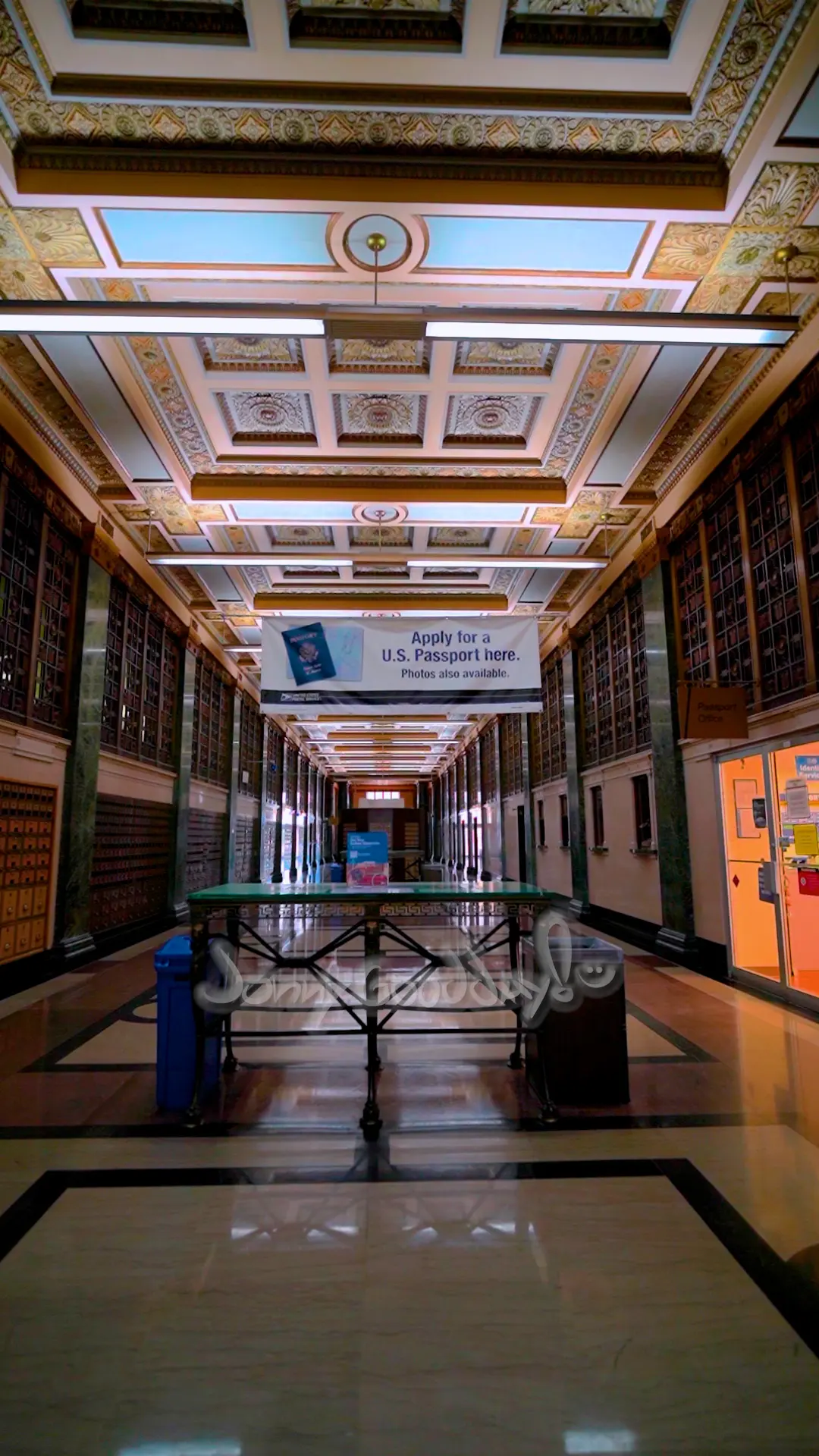
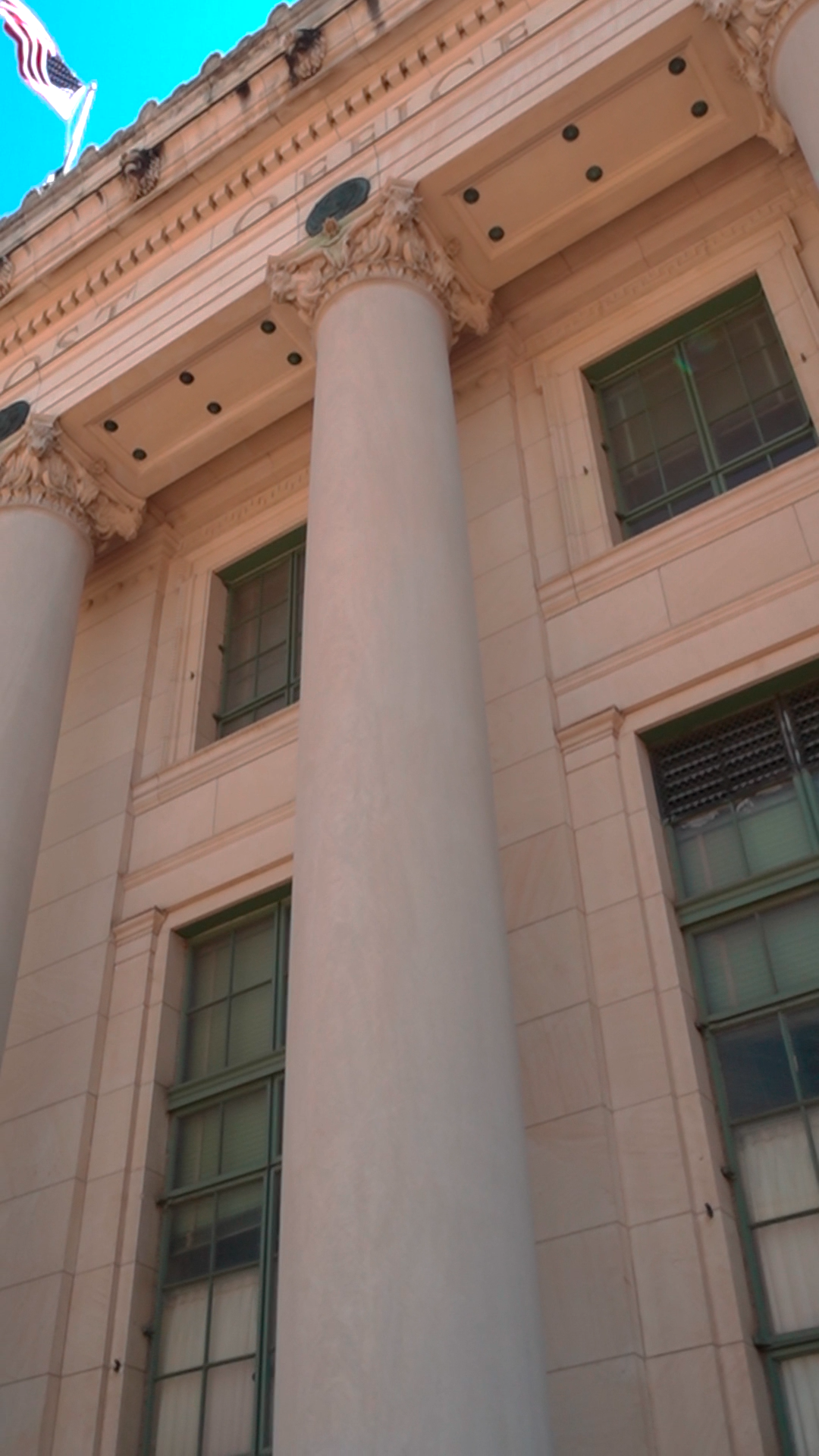
At Lancaster and Jennings avenues, the Fort Worth Central Post Office still has the composure of a building that expects public life to matter. Long rows of columns frame the entrance. Stone, bronze, marble, glass, and ornament turn the work of weighing parcels and sorting letters into something nearly ceremonial.
A public building for a growing city
The post office opened in 1933, when Fort Worth was emerging from the exuberance of the 1920s into the severity of the Great Depression. Designed by prominent Fort Worth architect Wyatt C. Hedrick, it belonged to an era when federal buildings were expected to communicate stability. Its classical vocabulary did not promise luxury for a few. It promised that public institutions could possess permanence and beauty for everyone.
The exterior’s disciplined rhythm continues inside. A long postal lobby is lined with service windows and boxes, while ornamental ceilings and polished materials draw the eye upward. Even in a hurry, a visitor moves through a sequence: approach, threshold, hall, counter. Architecture organizes the errand and gives it dignity.
Art among the mailboxes
In 1934, federal public-art programs brought murals into the building. Works by Fort Worth artists Dwight Clay Holmes and William Henry Baker joined architecture and labor at a moment when artists, builders, and public institutions were all searching for ways through national hardship. The art was not placed in a private gallery. It lived beside everyday transactions.
That choice matters. A post office touches nearly every part of a community: court notices and birthday cards, military letters and small-business orders, condolences, tax forms, love notes, and news from people who have gone away. The building’s richness suggests that these exchanges—however routine—form part of the civic record.
The machinery behind the grace
For all its beauty, the building was also a machine. Mail arrived by rail and road, moved through sorting rooms, and left again in carefully timed routes. Its location near Fort Worth’s great passenger and freight infrastructure was practical. The city’s postal system stood within a larger network of tracks, warehouses, highways, and human schedules.
That network has changed. Digital messages now cross the country without a loading dock, and modern logistics facilities rarely resemble civic monuments. Yet physical mail has not vanished, and neither has the building’s lesson: efficiency and beauty do not have to be enemies.
A landmark that still works
The post office was listed in the National Register of Historic Places in 1985. More important than a designation, however, is continued use. A functioning landmark stays connected to the habits of the city. People do not need a ticket or a special occasion to enter. They come because something must be sent.
Most cities have buildings that announce power. This one announces service. Its columns are not the end of the story; they are the frame around thousands of small acts of connection.
Sources and further reading
- National Park Service: Fort Worth U.S. Post Office National Register record
- Texas Historical Commission Atlas
Continue exploring
More stories from the field
Fort Worth’s Courthouse Outlasted the Officials Who Built It
Fort Worth’s 1895 courthouse came in under budget—and still cost the county judge and commissioners their jobs. Explore the landmark’s history, restoration…
Read the story →
The Last Cut: How Swift & Company Made Fort Worth a Packinghouse City
Swift & Company helped build Fort Worth. Explore the workers, packinghouses, and surviving fragments behind the Stockyards story.
Read the story →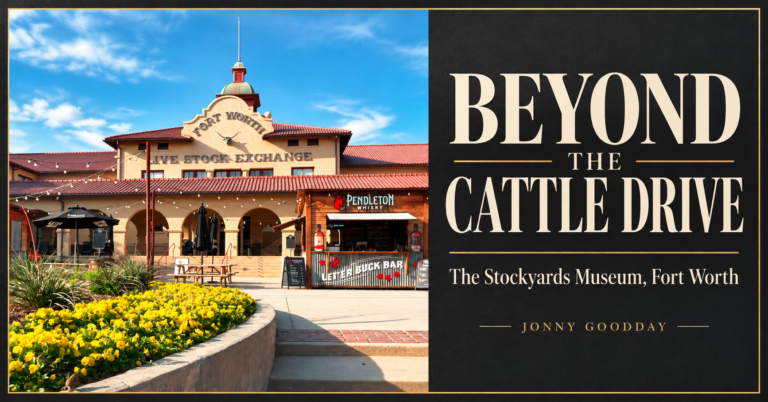
Inside Fort Worth’s Stockyards Museum with Teresa Burleson
Join Jonny Goodday and museum director Teresa Burleson for the photographs, people and working history behind Fort Worth’s Stockyards Museum.
Read the story →Stay close to the road
Follow the next story.
Occasional article updates, photographs, and films from the field.
Help document the places worth remembering. Support the work →
No Responses