

Fort Worth Stories
Fort Worth’s Courthouse Outlasted the Officials Who Built It
At the north end of Main Street, Fort Worth rises into pink granite. The courthouse does not simply terminate the view; it gathers the city’s arguments, ambitions, losses, and paperwork into one enduring shape.
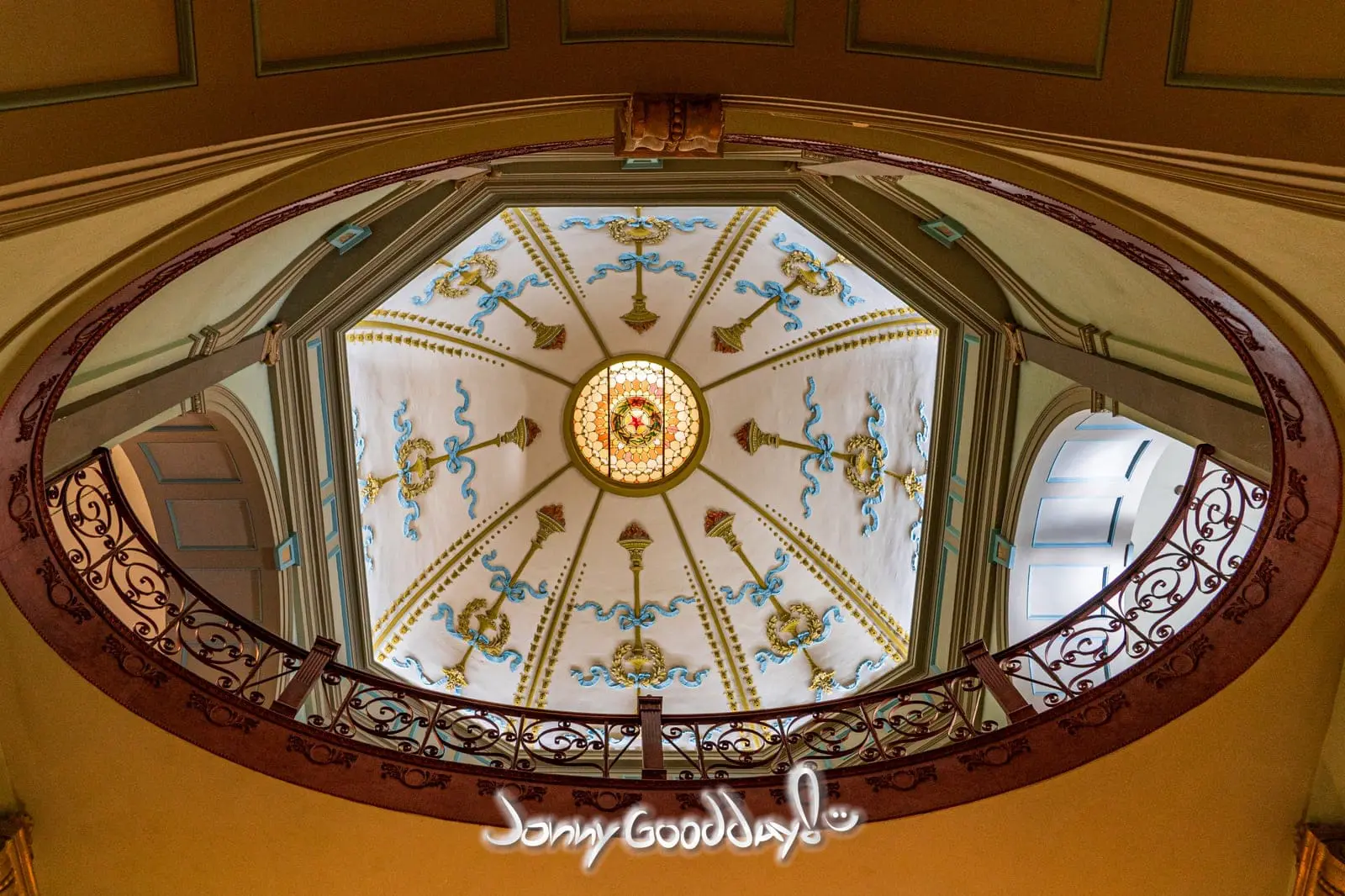
In this story
The Tarrant County Courthouse has the kind of presence that makes a person slow down. Its clock tower stands above the bluff where the United States Army established a frontier post in 1849. Before the stone, before the courtrooms, even before Fort Worth had fully decided what it would become, this ground was already being asked to hold authority.
A county seat worth fighting over
Tarrant County was created in 1849 and named for Republic of Texas militia commander Edward H. Tarrant. The first county seat was Birdville, but the small settlements of Birdville and Fort Worth soon entered a bitter contest over where the county’s government should live. Fort Worth won a close election in 1856; another vote in 1860 settled the matter more decisively. The location was never merely convenient. A courthouse meant records, law, money, visitors, and a future.
The price of permanence
The present courthouse was completed in 1895 after more than two years of construction. Central Texas pink granite gave it weight, color, and an unmistakable relationship to the state’s monumental public architecture. Its balanced massing, arched openings, tower, carved details, and carefully composed interior announced that a frontier county had entered a more permanent age.
The irony is that permanence looked suspiciously like extravagance. According to Tarrant County’s own history, the project finished nearly 20 percent under budget, yet voters were so angered by what they considered excessive spending that they removed the county judge and the entire commissioners court at the next election. The building survived the political storm. The officials did not.
That episode gives the courthouse a useful human scale. Grand public buildings are often described as if everyone welcomed them from the beginning. This one reminds us that architecture can become beloved long after it has been debated, resented, altered, and paid for.
A working building, not a stage set
The courthouse has never been only an object to admire from Main Street. Courts, public records, the law library, and county offices continue to operate inside it. Every day, ordinary matters pass through extraordinary rooms: a family searches a deed, an attorney studies a case, a clerk files a record, and a resident enters a courtroom carrying the private weight of a public decision.
Twentieth-century alterations obscured parts of the original design, but a major rehabilitation in the early 1980s restored important historic features and returned dignity to spaces that had been divided or covered. Preservation here was not an attempt to freeze 1895. It was an effort to let a historic building continue doing the work for which it was built.
What the stone remembers
Courthouses are containers for official memory. Births, marriages, deaths, property, trials, debts, and disputes become lines in files stored behind walls built to outlast the people named in them. But this courthouse carries an unofficial memory too: the rivalry that brought the county seat to Fort Worth, the anger over its cost, the alterations made in the name of progress, and the later decision to recover what had been lost.
Granite can make a building seem immovable. History says otherwise. The courthouse has endured because generation after generation found a new reason to keep it standing—and because public life still enters through its doors.
Sources and further reading
- Tarrant County: County history
- Historic Fort Worth: Tarrant County Courthouse
- Tarrant County: Downtown campus and current offices
Continue exploring
More stories from the field
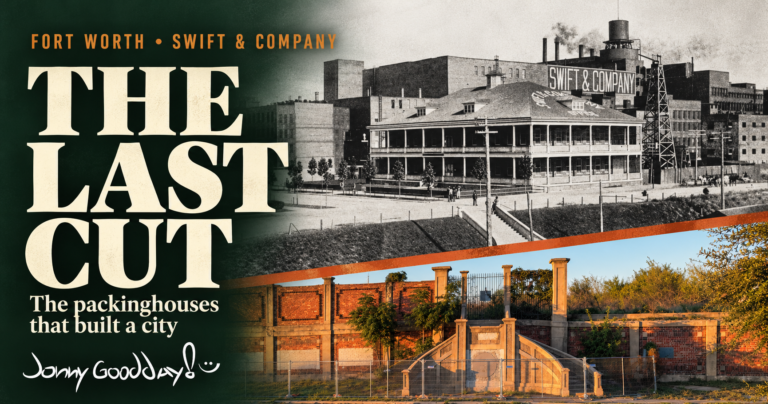
The Last Cut: How Swift & Company Made Fort Worth a Packinghouse City
Swift & Company helped build Fort Worth. Explore the workers, packinghouses, and surviving fragments behind the Stockyards story.
Read the story →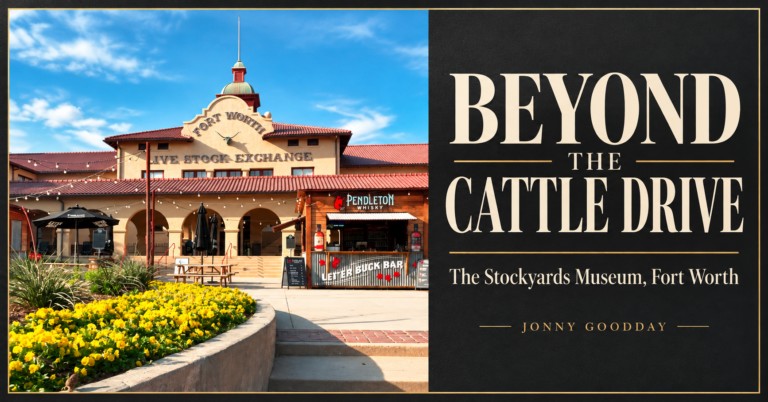
Inside Fort Worth’s Stockyards Museum with Teresa Burleson
Join Jonny Goodday and museum director Teresa Burleson for the photographs, people and working history behind Fort Worth’s Stockyards Museum.
Read the story →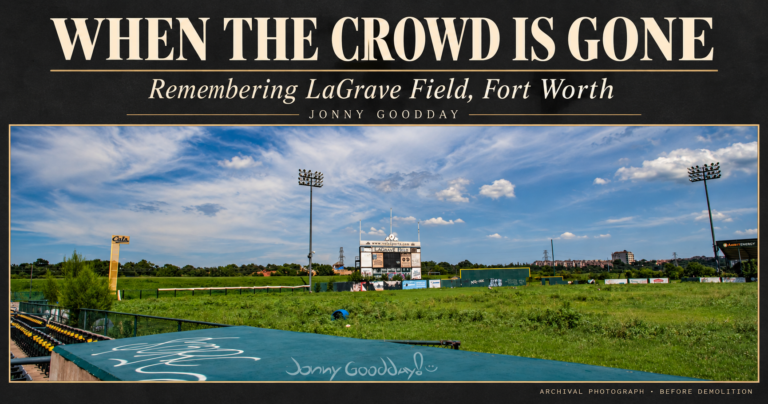
Remembering LaGrave Field and the Fort Worth Cats
Jonny Goodday’s photographs preserve Fort Worth’s LaGrave Field before demolition, connecting the abandoned ballpark with the Cats and the memories it held.
Read the story →Stay close to the road
Follow the next story.
Occasional article updates, photographs, and films from the field.
Help document the places worth remembering. Support the work →
No Responses