

Explorations
The Church That Refused to Die: First Christian Church of Chico
A church can fall silent without becoming empty. Hymns leave the air, but the room keeps their shape. A bell stops ringing, but a town still remembers where to listen.
In this story
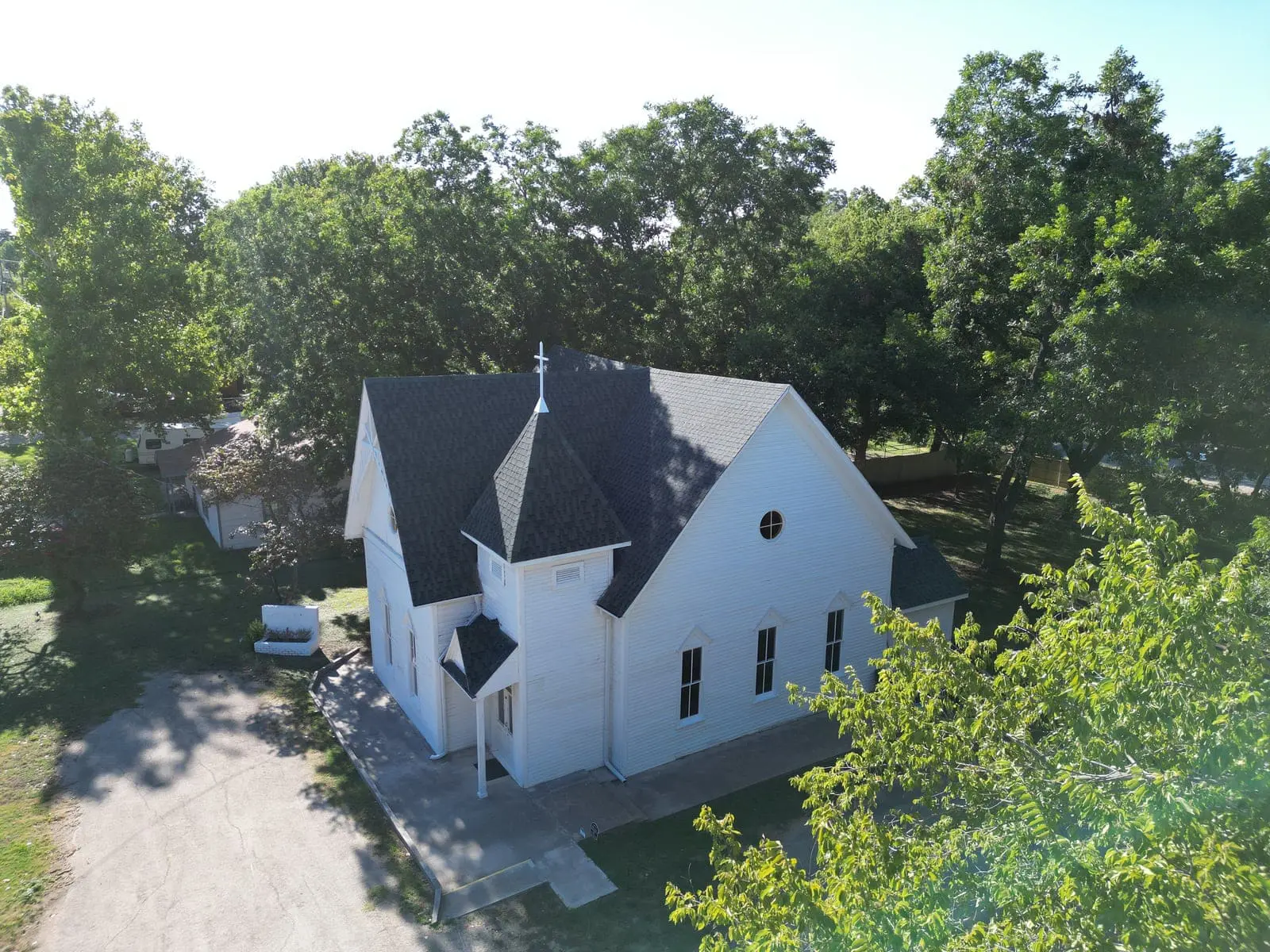
The First Christian Church of Chico stands in white wood beneath a high, dark roof. From above, its additions and intersecting gables suggest a building that grew with the needs of the people inside it. From the ground, the windows and modest steeple read as familiar Texas church architecture—simple until one begins to notice how carefully it was made.
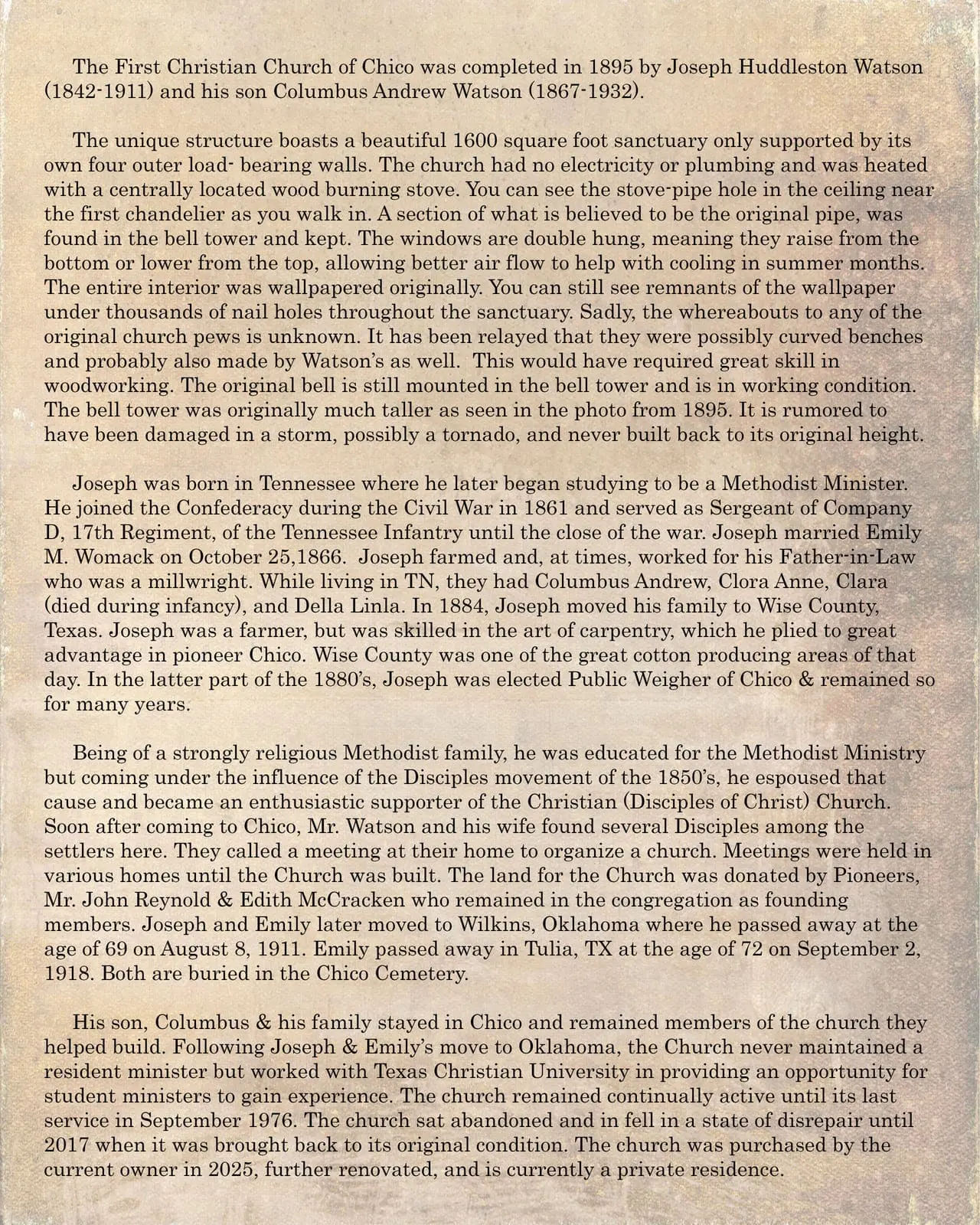
Raised in 1895
Jonny Goodday’s film documents a history carried by the building and the people restoring it. The church was built in 1895 by Civil War veteran Joseph Huddleston Watson and his son, Columbus. Its sanctuary was constructed without an interior support post interrupting the room, allowing the congregation to gather beneath a broad span of timber and faith.
The original bell survives, a physical link to the days when sound traveled across Chico as invitation, announcement, and alarm. Before electronic messages, a bell made community audible.
The long quiet
Congregations change as towns change. Families move, denominations merge, buildings age, and the cost of maintenance overtakes the resources of a shrinking membership. The church closed in 1975. Fifty years of silence followed—not complete abandonment of memory, but the slow uncertainty that surrounds a building after its original purpose ends.
Wood structures are especially vulnerable to time. Water enters through small failures. Foundations settle. Paint gives way to sun. Every repair postponed becomes a larger argument with weather. Yet old churches often retain what new construction cannot reproduce: the marks of local hands, the proportions of another era, and the emotional geography of weddings, funerals, baptisms, suppers, and ordinary Sundays.
Restoration begins with listening
New owners began restoration work in June 2025. The most meaningful restorations do not ask only how to make a building look new. They ask what must remain old: original material, structural logic, handmade details, the bell, and the stories of people who knew the place before the work began.
That balance can be difficult. A historic building needs modern safety, weather protection, utilities, and a sustainable use. Every intervention carries a choice between replacement and repair. The church’s strongest future will come from decisions that keep its history legible while giving it a reason to stay occupied.
What survives when a congregation leaves?
A church is not holy because boards and nails are old. Its meaning comes from people, and people eventually leave. But architecture can hold the outline of their care. The First Christian Church of Chico still shows how a small Texas community once chose to gather, build, and believe together.
Its restoration is therefore larger than a construction project. It is a test of whether a town’s memory can find a new use without losing its voice. When the old bell rings again, it will not reproduce 1895. It will announce that the building has entered another chapter.
Access note: This is an active restoration project and not an abandoned attraction. Respect private property and arrange any visit through the owners or an announced public event.
Sources and further reading
Continue exploring
More stories from the field
Fort Worth’s Courthouse Outlasted the Officials Who Built It
Fort Worth’s 1895 courthouse came in under budget—and still cost the county judge and commissioners their jobs. Explore the landmark’s history, restoration…
Read the story →
The Last Cut: How Swift & Company Made Fort Worth a Packinghouse City
Swift & Company helped build Fort Worth. Explore the workers, packinghouses, and surviving fragments behind the Stockyards story.
Read the story →
Inside the Atlas Missile Museum of Texas at Oplin
Go inside Oplin’s Atlas Missile Museum with Jonny Goodday and Bruce Townsley, where Cold War history and a remarkable community restoration meet.
Read the story →Stay close to the road
Follow the next story.
Occasional article updates, photographs, and films from the field.
Help document the places worth remembering. Support the work →
No Responses