

Explorations
Who Will Fund Dallas’s Thanks-Giving Square?
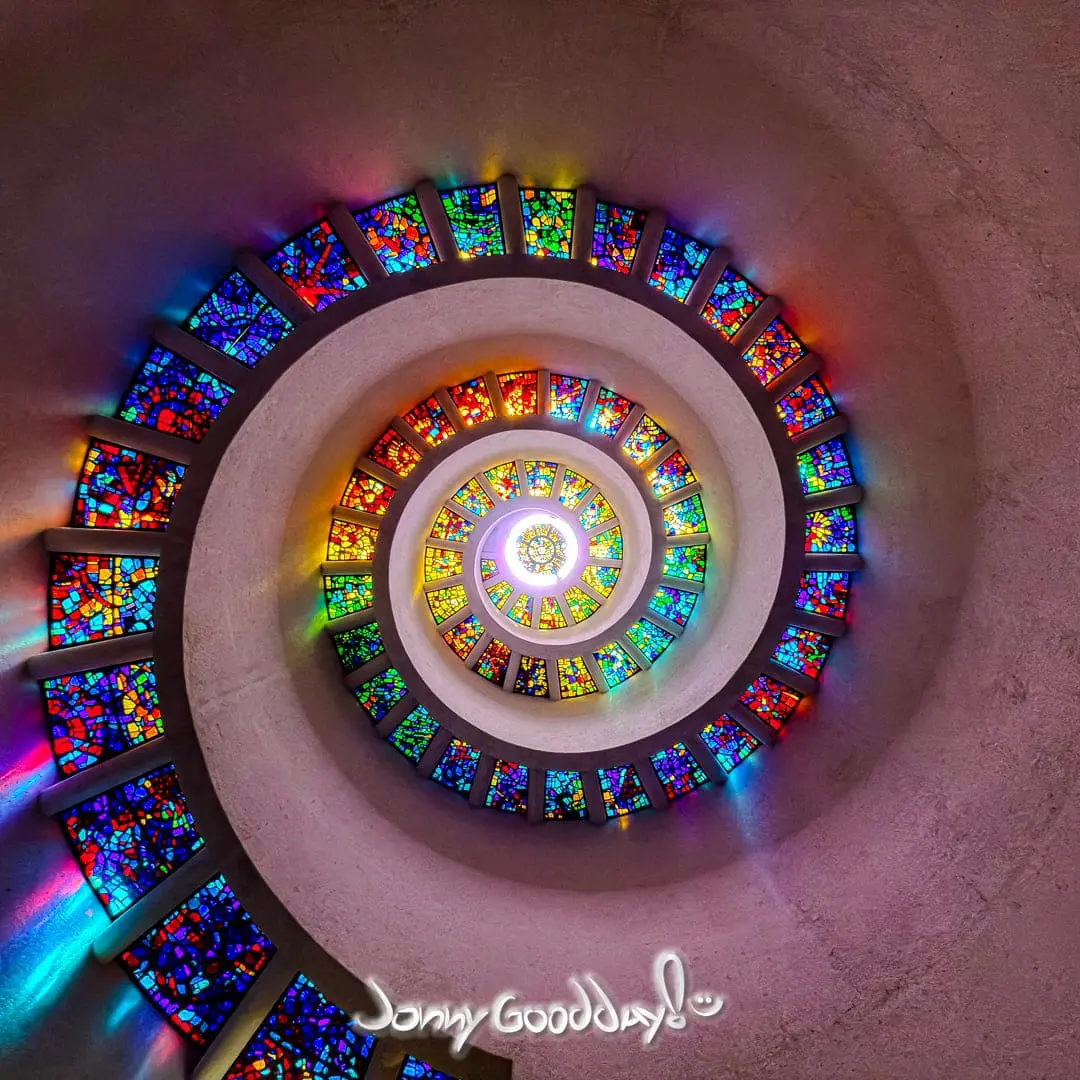
Downtown Dallas is built from straight lines and urgent destinations. Thanks-Giving Square answers with a curve—a white spiral lifting toward light.
In this story
The square occupies a small block, but its ambition has always been larger than its footprint. It is neither a church for one congregation nor a park meant only for retreat. It is a civic place organized around gratitude: an idea broad enough to cross traditions and personal enough to begin with a single life.
A foundation before a building
Dallas leaders established the Thanks-Giving Foundation in 1964. Land for the square was acquired in 1968, and planning joined private initiative with the city’s desire to remake part of downtown. Construction began in the early 1970s. The complex was completed in stages, with the chapel and bell tower associated with the nation’s Bicentennial era and the full square completed in 1977.
Architect Philip Johnson designed a place reached through movement. Water, walls, ramps, garden space, and below-grade rooms separate the visitor from traffic without pretending the city is absent. The spiral Chapel of Thanks-Giving rises above the garden as the square’s unmistakable form.
Light at the center
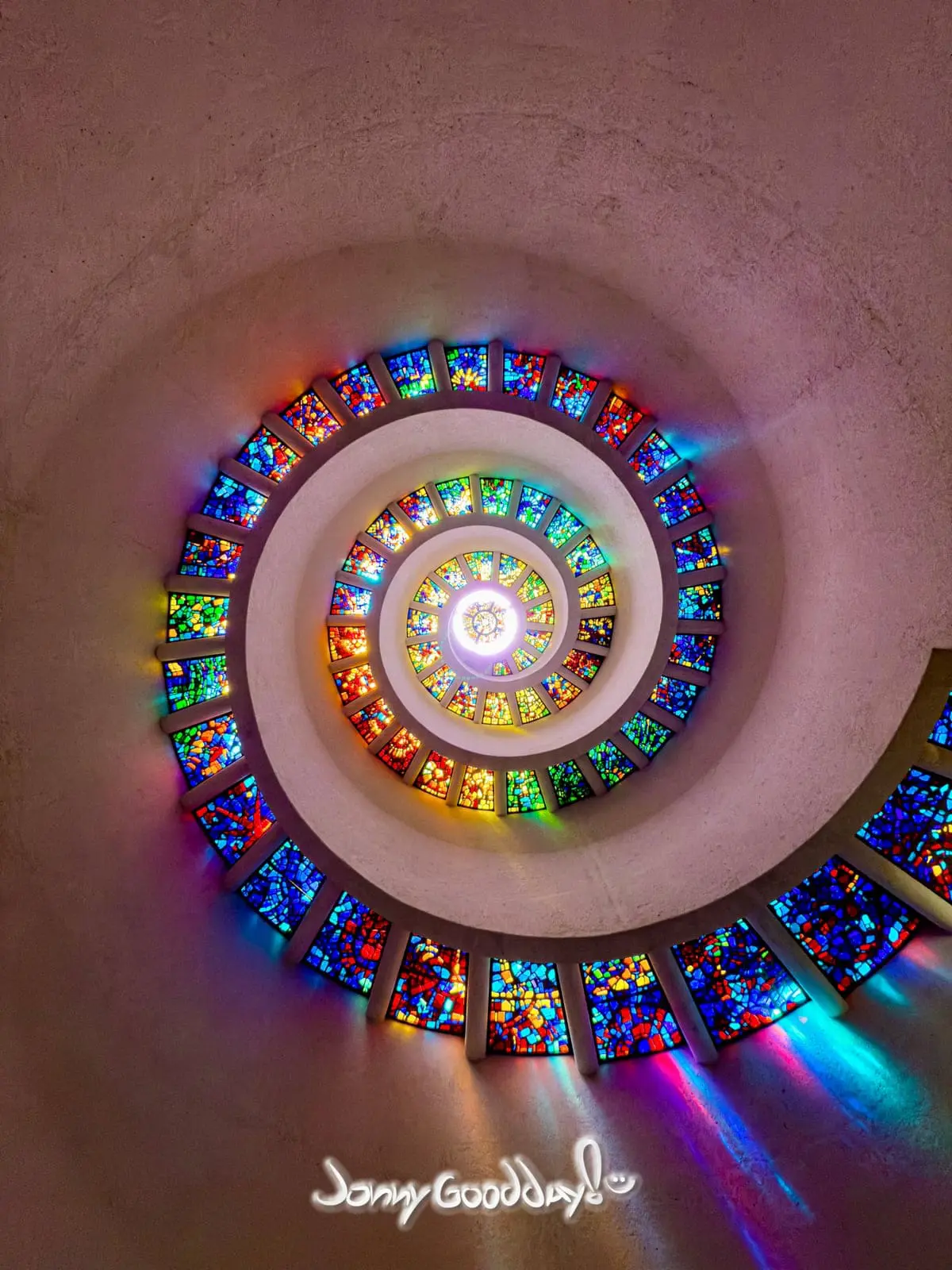
Inside the chapel, the architecture narrows attention upward. French stained-glass artist Gabriel Loire created the Glory Window from seventy-three panels. Color begins in deeper blues and rises through warmer tones toward a brilliant center. The glass does not illustrate a single story. It creates an experience of ascent.
The effect changes with weather and hour. Light moves across the curved interior, turning the walls into a quiet clock. Visitors of many faiths—and visitors of no particular faith—can enter without needing to agree on doctrine before looking up.
Gratitude as public practice
The square’s mission has included interfaith work, education, gatherings, vigils, and celebrations. It proposes that gratitude is not passive politeness. To give thanks is to recognize dependence: on other people, on inherited work, on the natural world, and on acts of care we did not perform for ourselves.
That proposition has been tested by the life of the city around it. Downtown patterns changed, buildings rose, pedestrian habits shifted, and maintenance needs accumulated. Recent city conversations have considered a broader Thanks-Giving District and the relationship between the square, surrounding streets, public infrastructure, and future investment. The questions are practical, but they also reveal how difficult it can be to fund and sustain spaces devoted to reflection rather than transaction.
A small place with a long reach
Thanks-Giving Square does not solve the city. It offers a pause within it. That pause can feel fragile, especially in a downtown where land, maintenance, and attention are expensive. But fragility is not the same as insignificance.
A person enters from traffic, follows the curve, and looks into a spiral of colored glass. Nothing outside has stopped. Yet the relationship to it may have shifted. Architecture cannot create gratitude on command, but it can make room for gratitude to arrive.
A new funding question
For most of its life, Thanks Giving Square has been carried by a partnership between civic leadership, private philanthropy, and the foundation that operates the site. That arrangement is being tested again. In a recent public fundraising plan for The District, the North Central Texas Council of Governments pledged ten million dollars, contingent on two dollars of private philanthropy for every dollar of public funding. The foundation says it is seeking lead and anchor donors to meet that match. Dallas has also continued to treat the square as part of a wider downtown public realm. The city’s 2024 to 2025 budget included a 462,416 dollar set aside for the Bullington Truck and Pedestrian Terminal, a project that includes Thanks Giving Square.
The recent funding issue is more than a question of repairing one building. It asks who will pay for maintenance, programming, and the civic ambitions that have kept the square open and meaningful. It also places a new responsibility on the people who value the site. Public agencies can help, but the long term future will require private support and a clear plan for keeping the square welcoming to the public.
What comes next
The square’s future will not be decided by symbolism alone. It will depend on whether public agencies, private donors, and the foundation can agree that a place built around gratitude is still a public investment worth making. For now, the spiral remains open as both architecture and argument. It is a reminder that civic ideals require caretakers, and that every generation eventually has to fund the places it says it values.
Visit thoughtfully
The garden and chapel are free and open on published schedules, while the Hall of Thanks-Giving is available for events or by appointment. Confirm current hours and access on the official website before visiting.
Sources and further reading
- Thanks-Giving Foundation: Visit the Square
- Handbook of Texas: Thanks-Giving Square
- City of Dallas: 2025 Thanks-Giving Square District briefing
Continue exploring
More stories from the field
Fort Worth’s Courthouse Outlasted the Officials Who Built It
Fort Worth’s 1895 courthouse came in under budget—and still cost the county judge and commissioners their jobs. Explore the landmark’s history, restoration…
Read the story →
The Last Cut: How Swift & Company Made Fort Worth a Packinghouse City
Swift & Company helped build Fort Worth. Explore the workers, packinghouses, and surviving fragments behind the Stockyards story.
Read the story →
Inside the Atlas Missile Museum of Texas at Oplin
Go inside Oplin’s Atlas Missile Museum with Jonny Goodday and Bruce Townsley, where Cold War history and a remarkable community restoration meet.
Read the story →Stay close to the road
Follow the next story.
Occasional article updates, photographs, and films from the field.
Help document the places worth remembering. Support the work →
No Responses