

Explorations
The Home the Woodmen Left Behind: Memory and Loss in Sherman
For years, the Woodmen Circle Home was photographed as a ruin. Families remembered it differently: not as a haunted shell, but as the place where a child was fed, educated, and given a future.
In this story
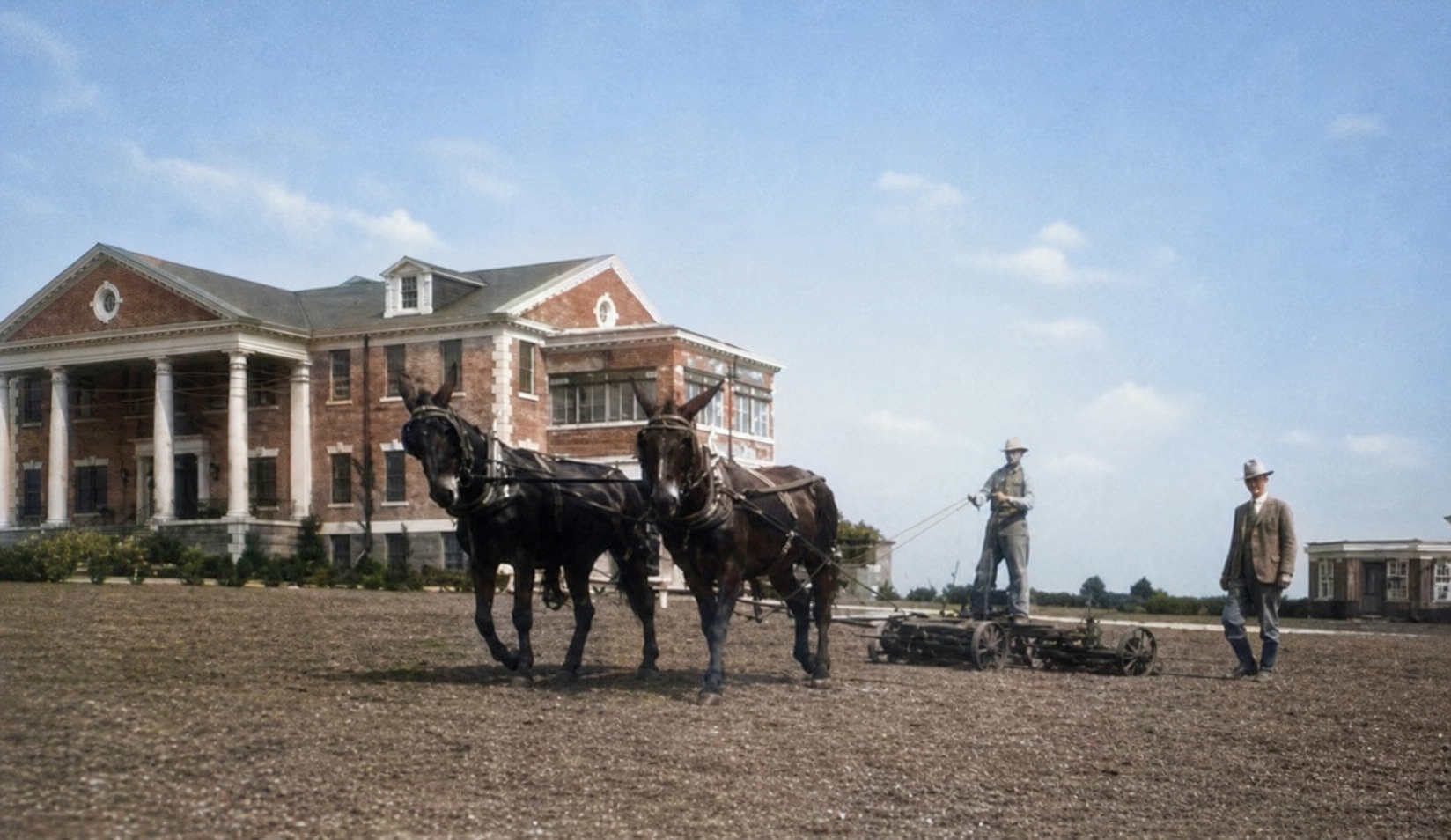
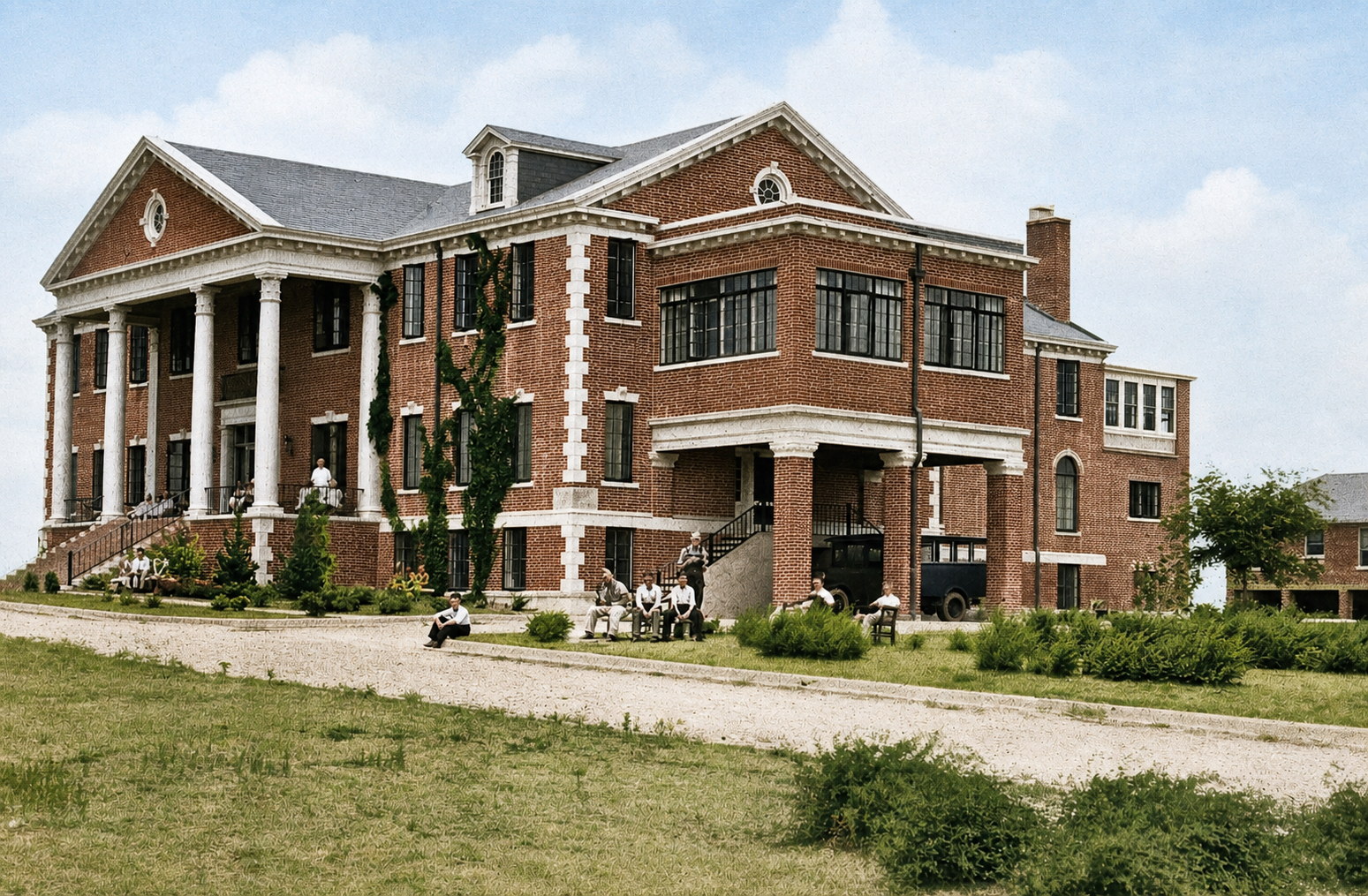
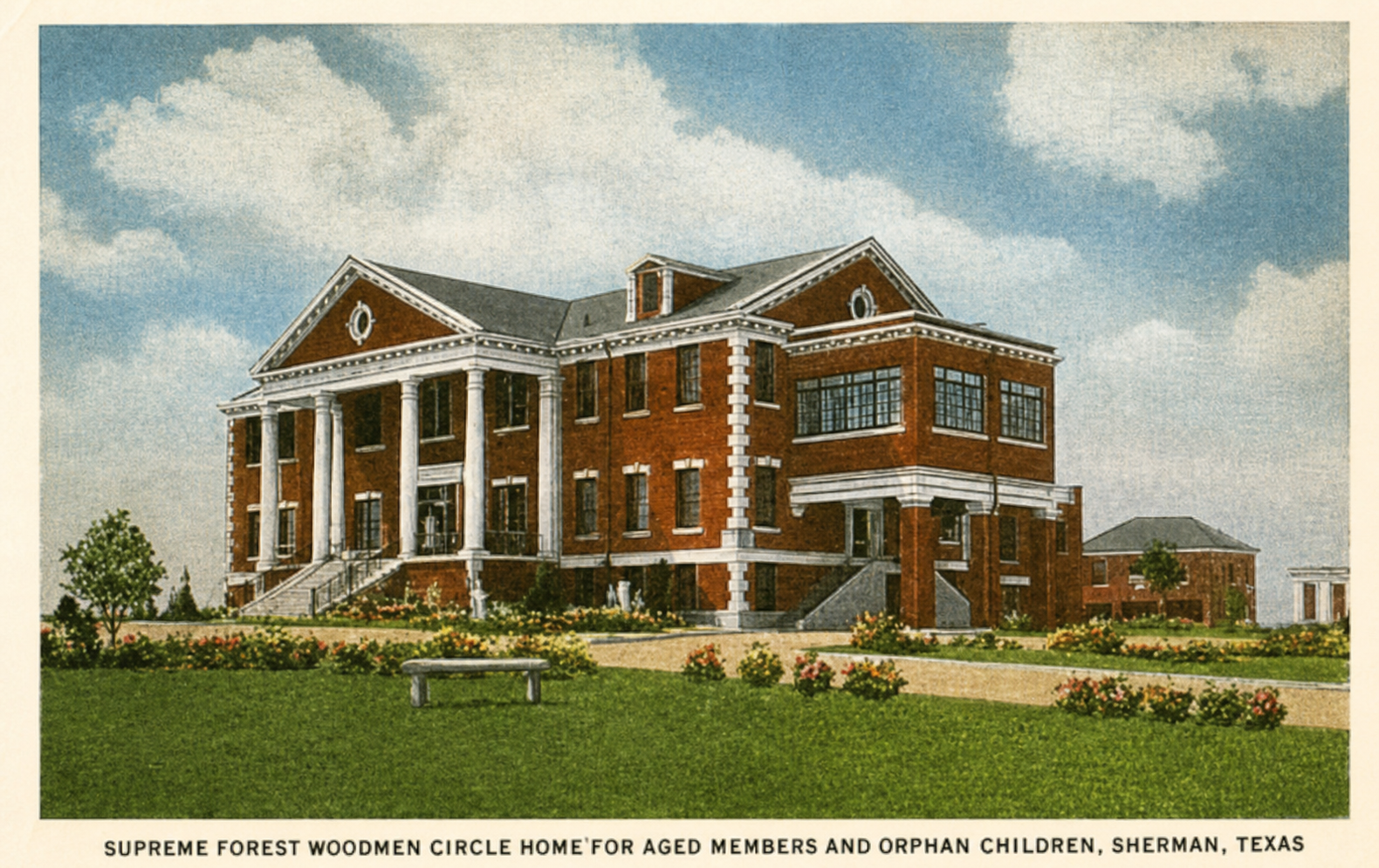
The red brick building once stood outside Sherman with white columns, broad lawns, and the institutional confidence of the early twentieth century. By its final years, windows were broken, floors were gone, graffiti covered walls, and stories about ghosts threatened to replace the lives that had actually unfolded there.
Watch the film
The film below follows the Woodmen Circle Home from its hopeful beginning through abandonment, loss, and the memories that survived it.
A fraternal promise made architectural
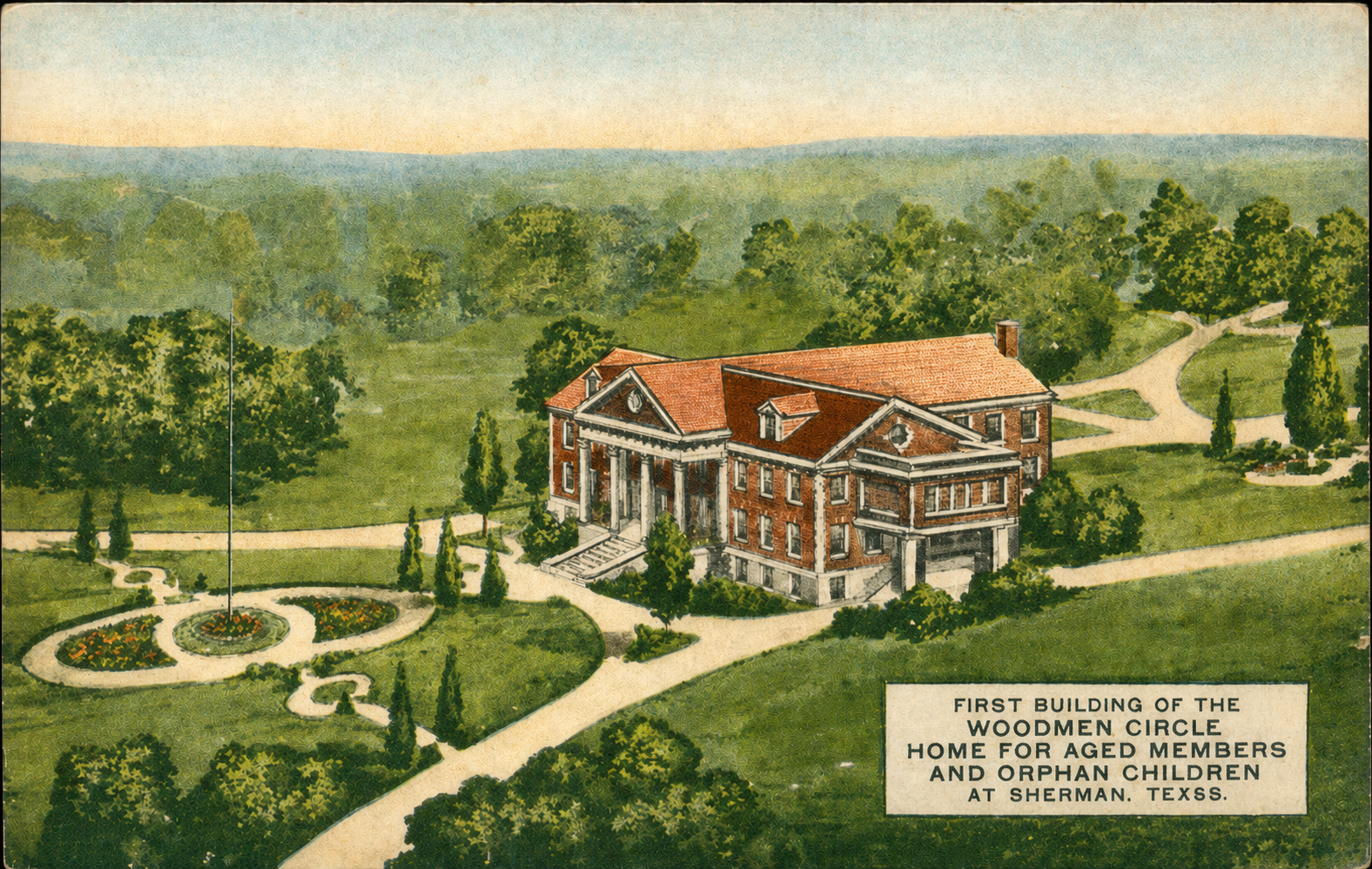
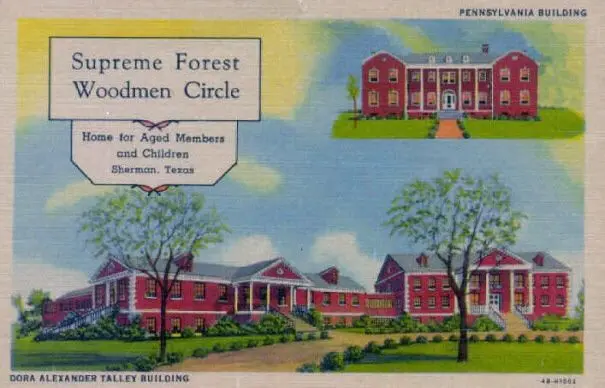
The Supreme Forest Woodmen Circle was a women’s fraternal benefit organization connected to the broader world of Woodmen societies. Such organizations combined insurance, ritual, mutual aid, and social life at a time when public safety nets were limited. The Sherman home, opened around 1930, gave that promise a physical form.
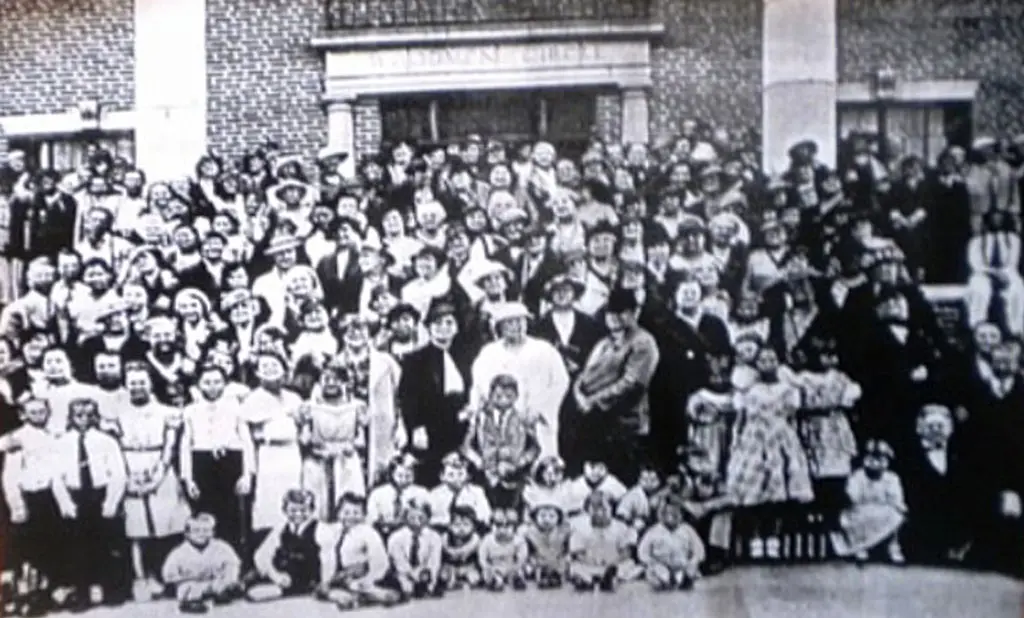
It served widows, orphans, and older members who needed support. The building was institutional, but it was also domestic: bedrooms, meals, schoolwork, friendships, discipline, illness, celebrations, and the daily negotiations of many people living together.
Life larger than the legend
Abandoned buildings attract stories because they cannot easily correct us. Empty halls become evidence for whatever fear or fantasy a visitor brings. At Woodmen Circle, paranormal lore eventually traveled farther than the history of residents.
Family testimony restores the scale. When demolition began in 2022, descendants told KXII about Margery Eldridge, who entered the home as a small child. She received care and education, was later adopted by a Sherman family, attended Austin College and the University of Texas, and built a life whose descendants credited the home with making their family possible.
That memory does not require the institution to have been perfect. It requires us to recognize that the building’s meaning came from real people, not the thrill of trespassing through their abandoned rooms.
Closure and long decline
The home closed in 1971. Decades of vacancy stripped away the parts of the building that might have supported reuse. Fire added damage. Materials disappeared. By 2022, city representatives said little remained inside and described the structure as a severe safety hazard.
Demolition began in May 2022. Crews found a time capsule containing books, organizational reports, lists of clubs, and a Bible. The discovery felt almost too fitting: at the moment the walls came down, the building offered one final box of evidence about the community that had created it.
Officials said brick and metal would be recycled, and bricks were offered to surviving residents and their families. Salvage could not equal preservation, but it allowed fragments of the place to move into private memory.
What remains after the landmark
The Woodmen Circle Home is gone. That fact changes the responsibility of photographs. They are no longer invitations to explore an atmospheric ruin. They are documents of scale, design, neglect, and loss.
The larger record now depends on oral histories, family albums, organizational records, newspaper reporting, artifacts, and responsible captions. A building can be demolished twice: first in material, then in meaning. Sherman has already endured the first loss. The second is still preventable.
Sources and further reading
- KXII: Families remember Woodmen Circle’s legacy
- KXII: Woodmen Circle time capsule opened
- KXII: Sherman demolition decision
Continue exploring
More stories from the field
Fort Worth’s Courthouse Outlasted the Officials Who Built It
Fort Worth’s 1895 courthouse came in under budget—and still cost the county judge and commissioners their jobs. Explore the landmark’s history, restoration…
Read the story →
The Last Cut: How Swift & Company Made Fort Worth a Packinghouse City
Swift & Company helped build Fort Worth. Explore the workers, packinghouses, and surviving fragments behind the Stockyards story.
Read the story →
Inside the Atlas Missile Museum of Texas at Oplin
Go inside Oplin’s Atlas Missile Museum with Jonny Goodday and Bruce Townsley, where Cold War history and a remarkable community restoration meet.
Read the story →Stay close to the road
Follow the next story.
Occasional article updates, photographs, and films from the field.
Help document the places worth remembering. Support the work →
No Responses