

Fort Worth Stories
Ridglea Theater: Fort Worth’s Historic Tower on Camp Bowie
Drive west on Camp Bowie and you see the Ridglea Theater before you see everything else.
In this story
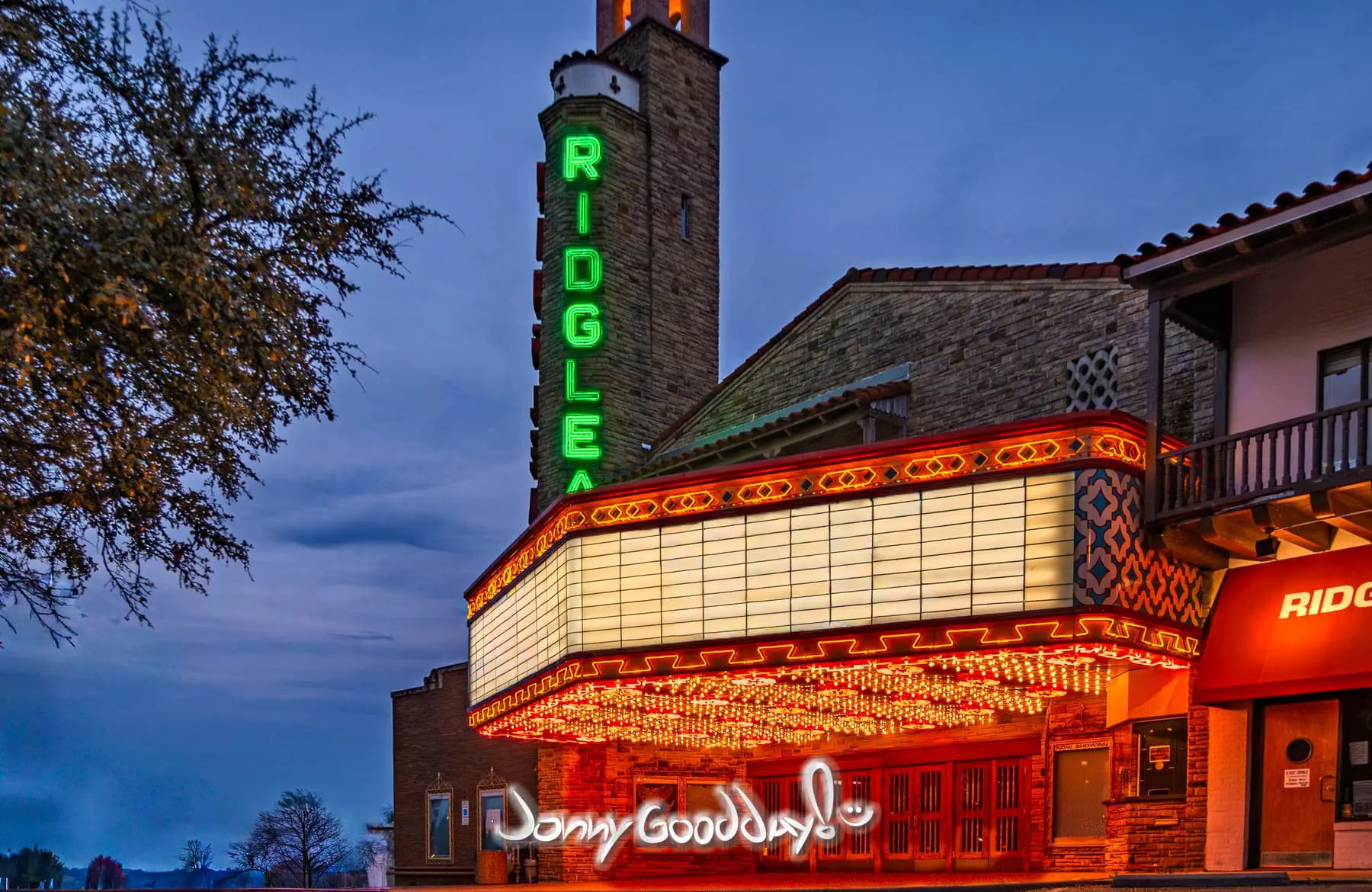
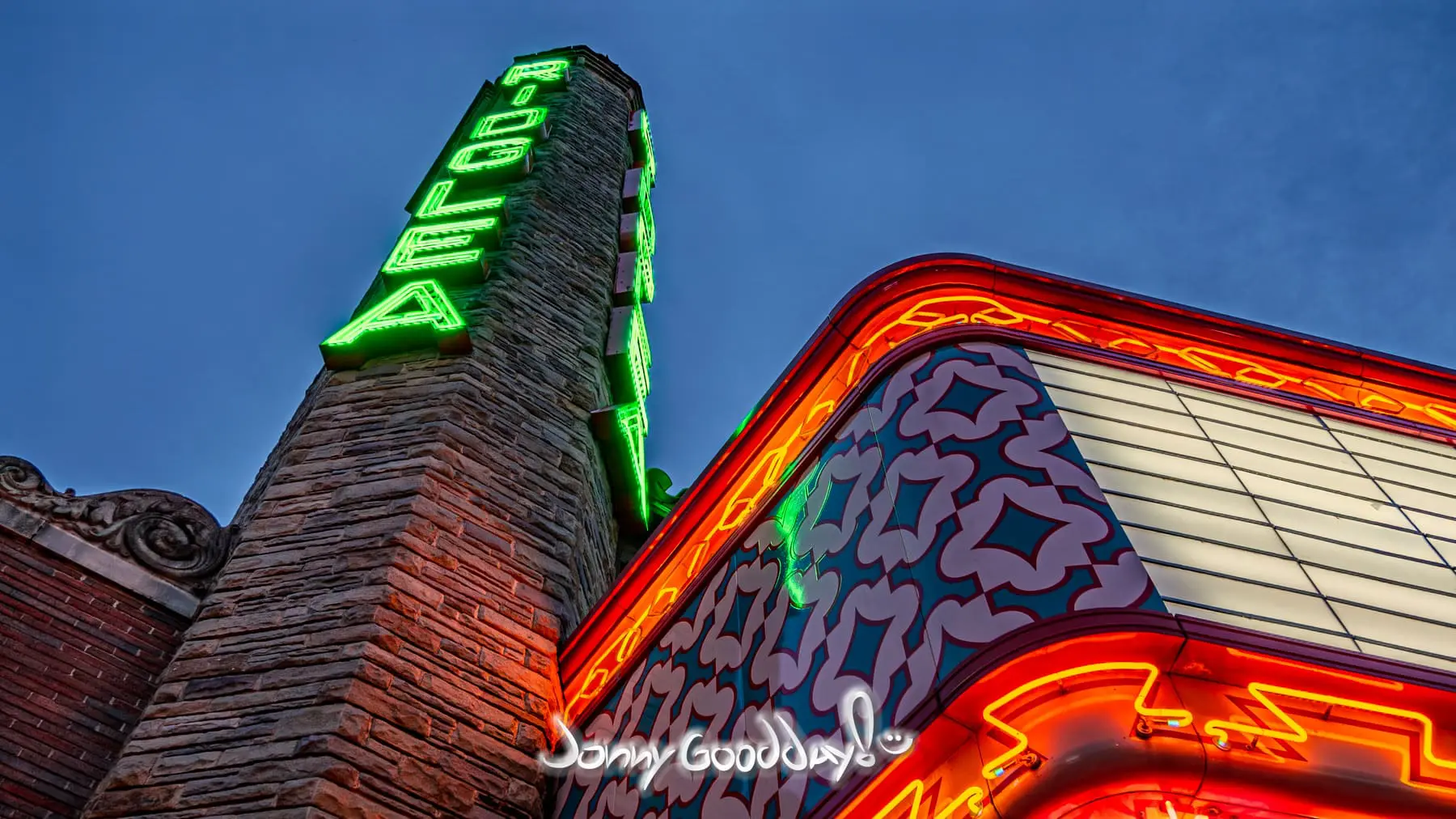
A stone tower with bold letters that read RIDGLEA. It rises over a low, tan building with red tile and a marquee that seems to lean over the sidewalk to say hello. The tower is about 70 feet tall and it has been doing this job since the theater’s earliest days.
Ridglea Theater: Fort Worth’s tower on Camp Bowie
A neighborhood showhouse with local roots
The Ridglea was built in the late 1940s at 6025 Camp Bowie, part of a planned retail stretch locals know as Ridglea Village. The project is tied to A. C. Luther, whose name you still hear when people talk about the district’s growth after the war. The style is Spanish Mediterranean, with Mission Revival touches on the stone and tile. The goal was simple. Give the West Side a first class showhouse that matched the neighborhood around it.
Opening night and the Interstate years
The curtain went up in December 1950, when the Interstate theater chain brought a single screen and big city showmanship to Fort Worth’s west side. People still trade stories about that first program and the long lines under the lights. The theater seated more than 1,300 in its prime, which made it a giant for a neighborhood venue.
Stone, terrazzo, and a mural that tells a story
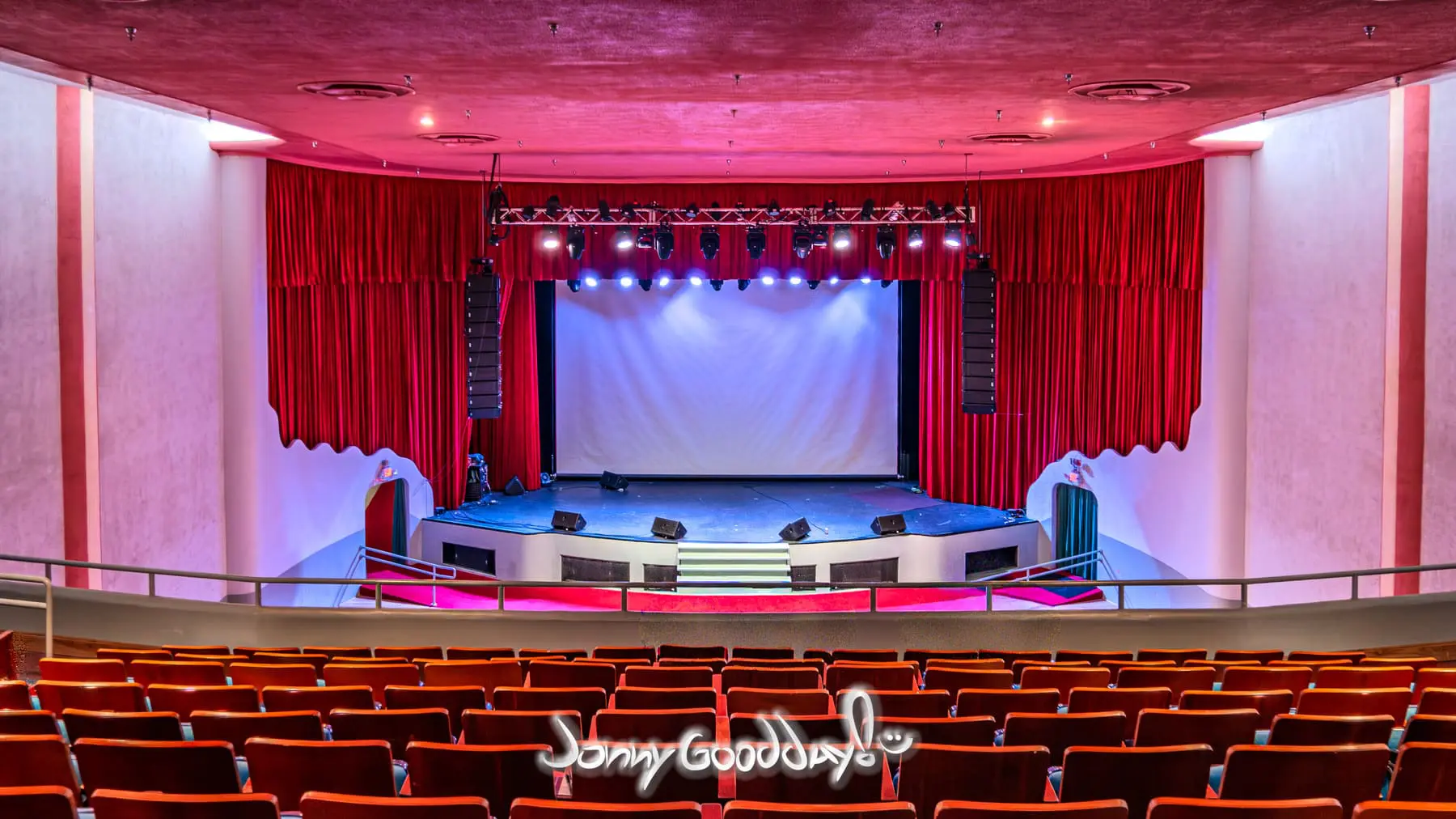
Step inside and the building tells you what it is made of. Terrazzo floors set with a compass rose pull you across the lobby. Over the counter, a panoramic mural by artist Eugene J. Gilboe shows Spanish explorers arriving in the Americas. The curved ceiling, the balcony, the red drapery, the plaster details, and the tiled roof all point to an era when a movie house was designed to feel like a night out, even before the show began.
From movie palace to multipurpose stage
Like many single screen houses, the Ridglea adapted as tastes changed. First-run pictures gave way to dinner film nights. Later, the room found a second life as a live music and special event venue. The big room and the famous tower made it easy to keep booking crowds. The layout could flex for film festivals, orchestras, award shows, and weddings while holding on to the feel of a classic theater.
The near miss on Camp Bowie
In 2010, a deal surfaced that could have gutted the building for a bank branch. Preservation groups and neighbors pushed back hard. Plans that would have kept the facade but removed major parts of the structure drew heat across the city. The outcry helped stall the deal and opened the door for a rescue.
The rescue and the long restoration
Dallas entrepreneur Jerry Shults stepped in late 2010 and bought the theater. Work crews closed the doors for a full restoration from 2011 into 2012. The project cost ran into the millions and took years of effort. Crews uncovered original details, revived the Spanish Mediterranean finishes, and modernized systems so the venue could work in the present day. The Ridglea reopened in 2012 to a crowd that had waited a long time to cheer.
A protected landmark at last
The theater earned a spot on the National Register of Historic Places in December 2011. The designation helps secure its future and recognizes the role the Ridglea has played on the West Side for more than seven decades. Historic Fort Worth had listed the building on its Most Endangered roster several times before the restoration, a sign of how close the city came to losing more than a facade.
What to look for when you visit
Start with the tower. Watch how the stone steps back near the top and how the letters stack in a vertical run that still reads from far down the boulevard. In the lobby, find the compass rose in the terrazzo and take in Gilboe’s mural. Look at the curve of the ceiling and how the room cradles the stage. These details are not fussy. They are practical beauty built to stand up to a thousand shoes on a Saturday night.
Why the Ridglea still matters
The Ridglea is proof that a neighborhood landmark can stay useful without losing its soul. It anchors a district, draws events, and keeps money close to home. It also keeps a promise from 1950. People can meet here, share a show, and walk back out under the tower feeling like they were part of something together. In a city that grows fast, that feeling is worth saving.
Read more about the restoration on the Ridglea Theater’s official landmark page.
Continue exploring Jonny Goodday’s Texas stories and historic places.
Closing image
Dusk hits the stone and the letters wake up one by one. Cars roll by on Camp Bowie and you can hear the lobby doors open as voices drift into the street. The tower does what it was built to do. It calls you in.
Sources
- The Ridglea. “About the Landmark.”
- Fort Worth Architecture. “Ridglea Theater.”
- TCU 360. “Ridglea Theater Deserves Preservation,” Aug. 25, 2010.
- TCU 360. “Ridglea Theater Receives Historical Designation,” Jan. 13, 2011.
- NBC 5 DFW. “Ridglea Theater Reopens After Two Year Renovation,” Oct. 22, 2012.
- Tanglewood Moms, Christy Ortiz. “A Labor of Love: The Historic Ridglea Theatre,” Aug. 3, 2016.
- Historic Fort Worth. “Most Endangered Places,” updated May 7, 2024.
- Wikipedia. “Ridglea Theatre,” National Register reference and overview.
Continue exploring
More stories from the field
Fort Worth’s Courthouse Outlasted the Officials Who Built It
Fort Worth’s 1895 courthouse came in under budget—and still cost the county judge and commissioners their jobs. Explore the landmark’s history, restoration…
Read the story →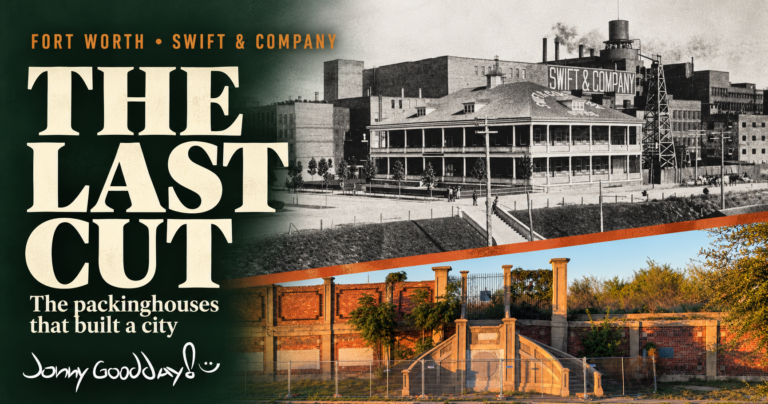
The Last Cut: How Swift & Company Made Fort Worth a Packinghouse City
Swift & Company helped build Fort Worth. Explore the workers, packinghouses, and surviving fragments behind the Stockyards story.
Read the story →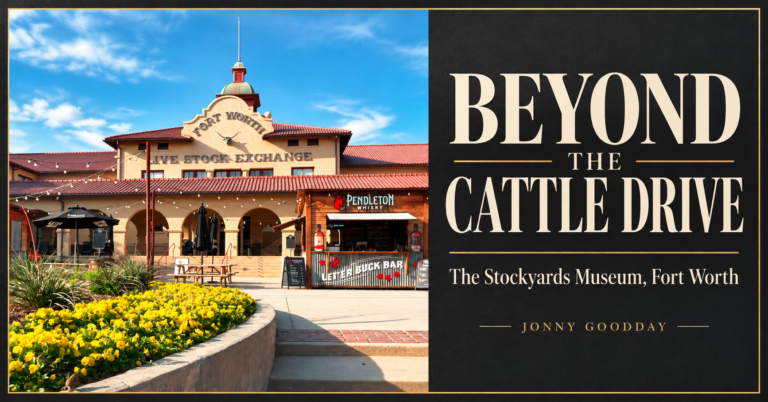
Inside Fort Worth’s Stockyards Museum with Teresa Burleson
Join Jonny Goodday and museum director Teresa Burleson for the photographs, people and working history behind Fort Worth’s Stockyards Museum.
Read the story →Stay close to the road
Follow the next story.
Occasional article updates, photographs, and films from the field.
Help document the places worth remembering. Support the work →
No Responses