

Texas History
The Power Plant Abilene Refused to Forget
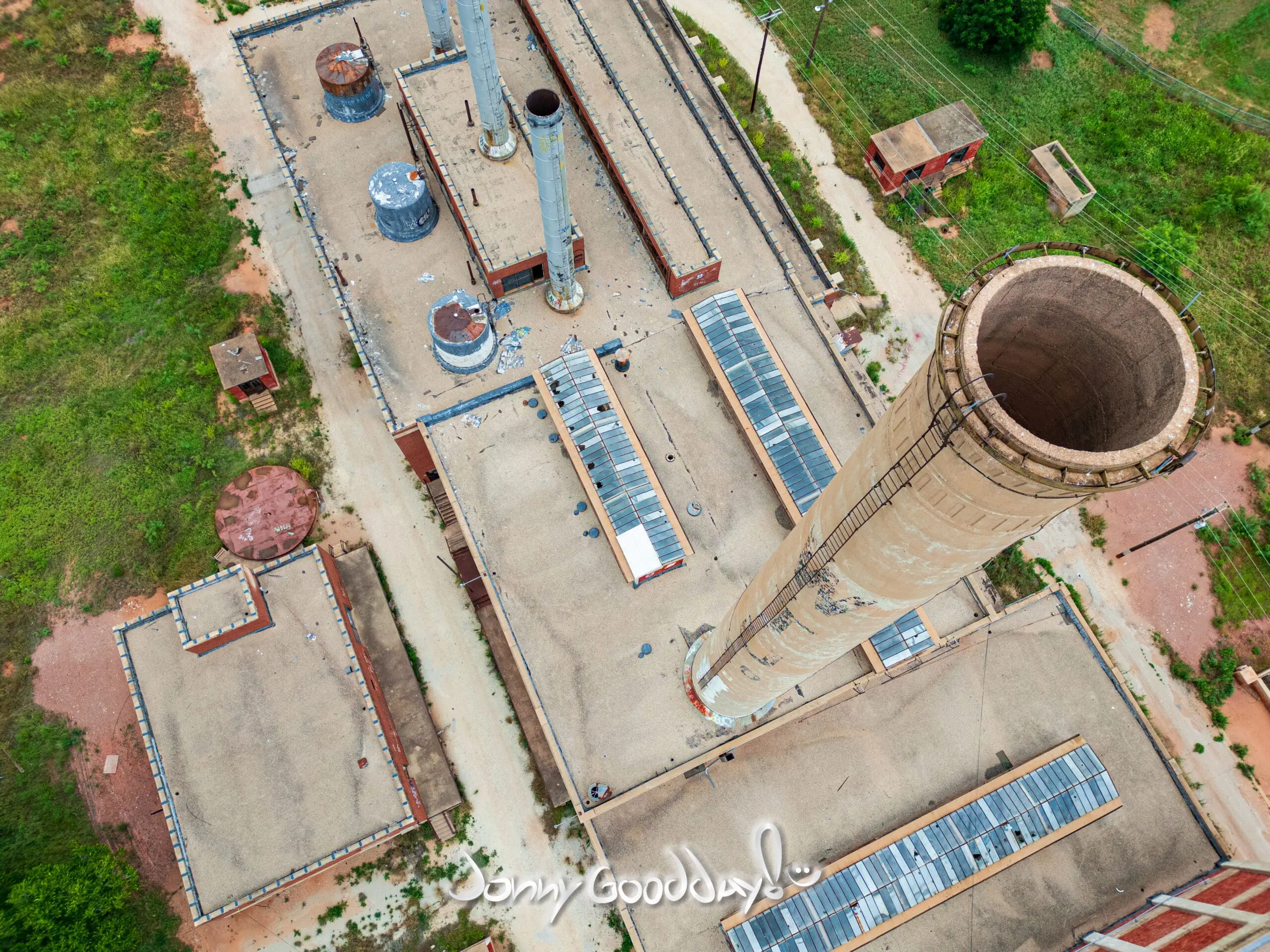
WTU Power Plant Abilene still stands as a monument to the people and machinery that powered West Texas.
In this story
Its next chapter is being shaped by preservationists who believe the old plant can serve the city again.
They came with gloves, tools, water, heavy equipment, and a shared belief that an abandoned building can still belong to the future. Volunteers moved across the grounds of the historic WTU Power Plant, clearing years of growth and debris from a complex that once supplied electricity across Abilene and the surrounding region.
The workday was practical, but it was also symbolic. Every cleared path made the plant easier to see. Every person who stepped through the gates became part of the effort to bring one of Abilene’s most important industrial landmarks back into public life.
“I think this is a great way to get the grants ready for repurposing, but also just create a buzz in the community that there are things happening at the WTU power plant.”
Abigail Payne, Executive Director of the Abilene Preservation League
Why WTU Power Plant Abilene still matters
The West Texas Utilities Company Power Plant was constructed from 1920 to 1922. Dallas architect Wyatt C. Hedrick designed the immense industrial building with tall structural bays and long banks of windows that brought natural light deep into the working spaces.
The plant arrived during a period when Abilene was becoming a regional center of trade and distribution. Electricity made that growth possible. It powered businesses, homes, public services, and the expanding systems that connected the city to communities across West Texas.
The plant also produced ice, an essential service in the years before mechanical refrigeration became common. Historic photographs show turbine rooms, tanks, compressors, and the machinery that turned fuel, water, pressure, and motion into services people used every day.
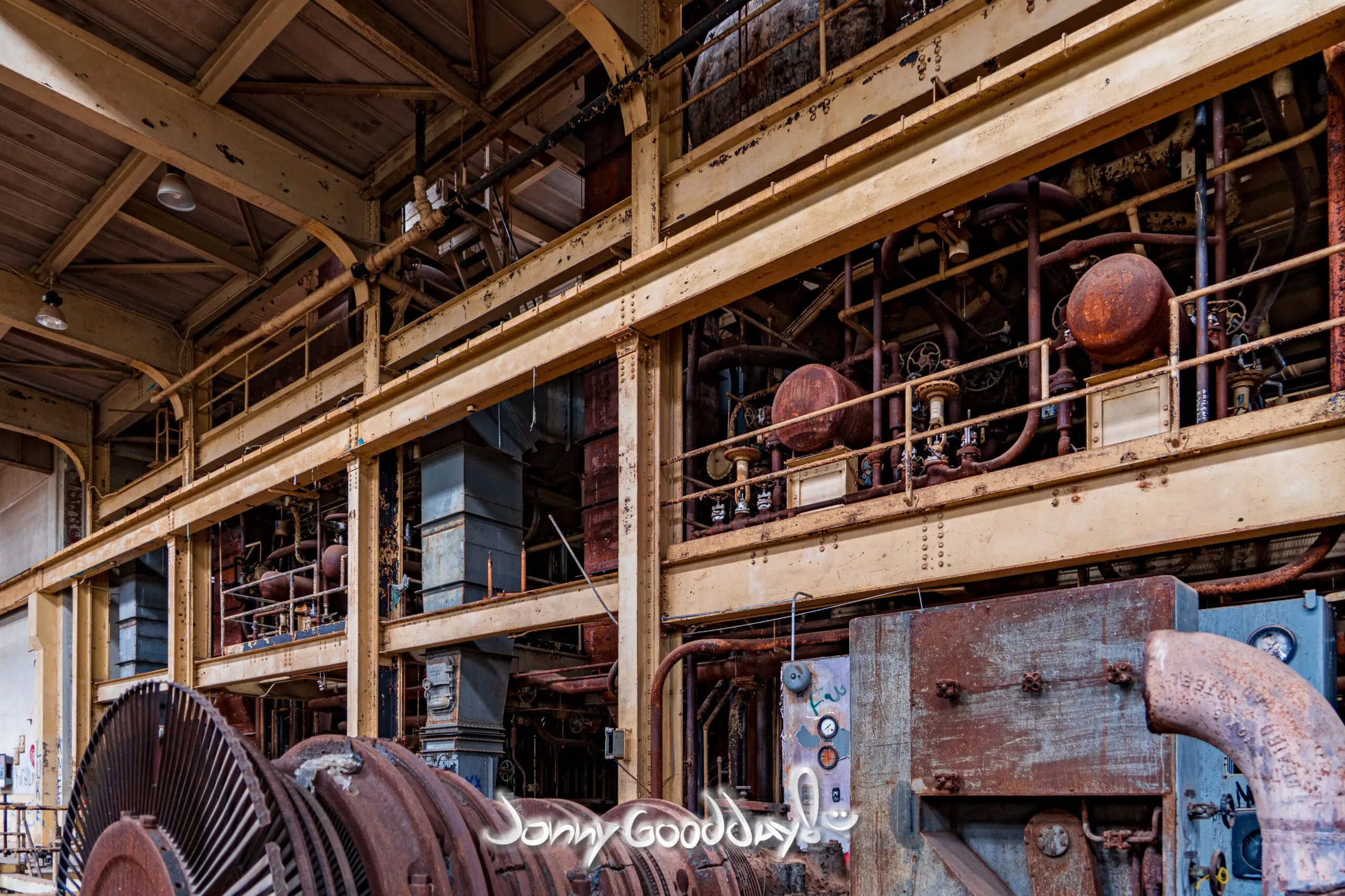
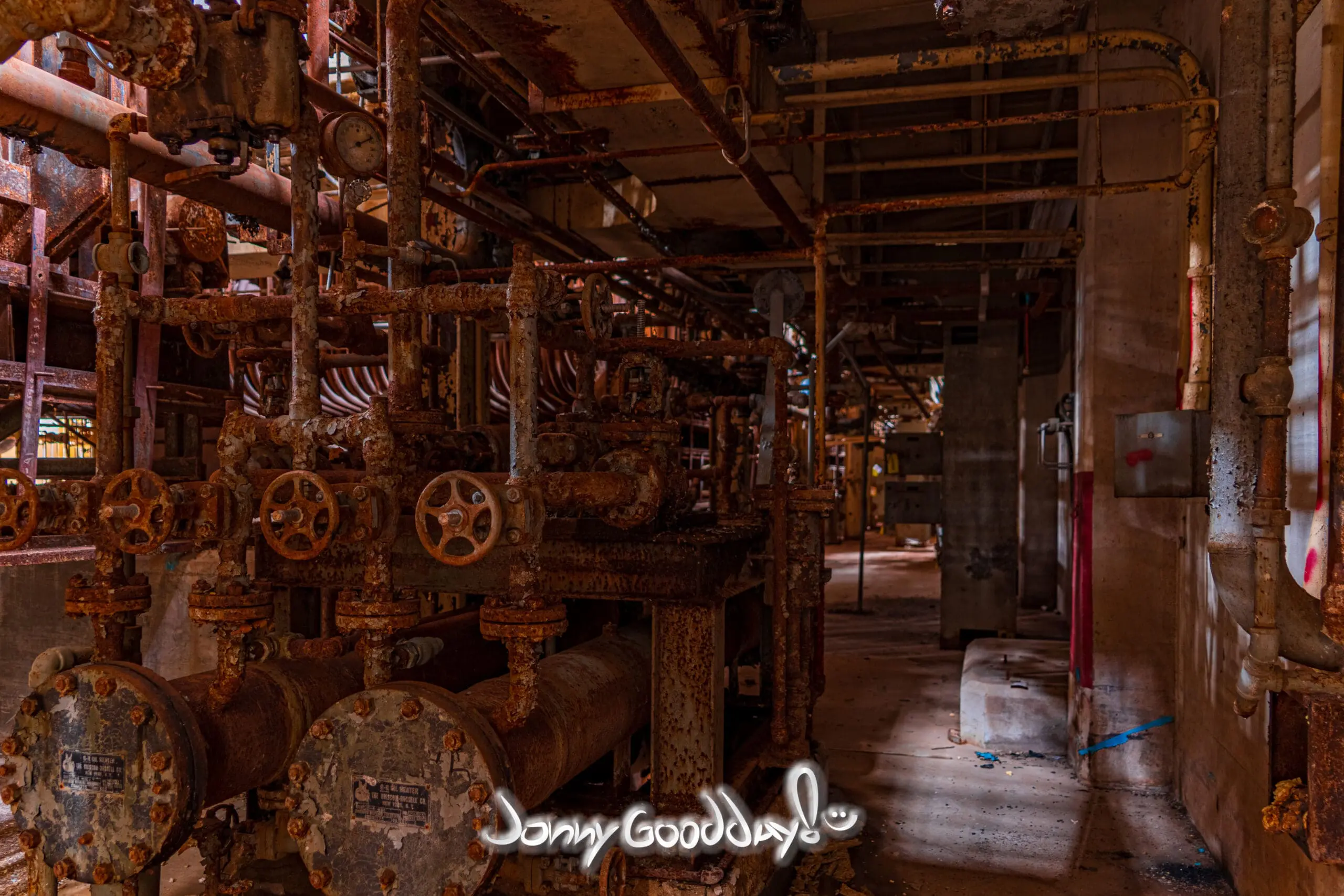
The scale of the interior is still startling. Steel columns rise through multiple levels. Pipes bend around platforms and disappear into shadow. Gauges and valves remain fixed in place. The machinery no longer turns, but the building still explains how industrial power was made.
Preservation Texas reports that the plant was one of roughly six facilities of its type constructed in Texas during the early twentieth century. It served as a regional electricity provider until the 1960s and helped shape the energy economy of West Texas.
A landmark that survived uncertainty
The WTU Power Plant was listed in the National Register of Historic Places in 1992. The Texas Historical Commission recognizes its local significance in commerce and its connection to Abilene’s development as a wholesale and distribution center.
National Register status records the importance of a property, but it does not guarantee that the building will survive. After decades without an active use, the plant faced deterioration and the possibility of demolition.
The Abilene Preservation League negotiated with the property owner and took responsibility for protecting the site. That transfer changed the question from whether the plant could be saved to what kind of future it might support.
Before major work could begin, the site needed environmental study. Payne said the Preservation League completed two phases of assessment to look for chemical hazards and other contamination.
“After those two phases, which was a report about this thick, we found it’s a very clean site, extremely clean.”
Abigail Payne
That result opened the way for the next step. The organization began seeking funding for a feasibility study that could identify uses supported by the building, its neighborhood, and the wider Abilene community.
The day Abilene came back inside
The September 2025 cleanup was organized with support from local sponsors and preservation partners. Corrender Taylor, creative program coordinator and historian for the Abilene Preservation League, watched volunteers continue to arrive throughout the day.
“The turnout was great. We had roughly about 70, 75, maybe 80 people show up.”
Corrender Taylor
Payne believed the final number may have been even higher.
“We were hoping for 50 volunteers, and we haven’t finished counting, but I think we have anywhere from 80 to 100 here today.”
Abigail Payne
Rusted Tin Services helped organize the work and bring together equipment and resources. Downtown Abilene and Deutsche Windtechnik supported the event, while local businesses helped provide food, water, and shirts for the volunteers.
The result was more than a cleaner property. The workday gave people a rare chance to experience a place that had long been visible from a distance but closed to the public.
Jared Baze, a supervisor with Deutsche Windtechnik, had grown up in the area looking at the plant. Walking onto the grounds carried personal meaning.
“To finally get to come in here and see the facility, to be on the grounds after growing up in the area, is something I’ve always wanted to be a part of.”
Jared Baze
Old energy meets a new industry
Baze works in renewable energy. For him, supporting the preservation of an early generating plant connected two eras of the same story.
“Us being in the renewables industry, to be able to support a historic generation facility like this and try to repurpose it and bring it back to the community in Abilene is awesome.”
Jared Baze
The contrast feels fitting. The WTU plant represents the infrastructure that first carried large scale electric power into the region. The people now helping protect it include those working in the technologies shaping the next chapter of energy production.
Preservation does not require pretending that a building can return to its original job. It asks a more useful question. What can the structure become while keeping the character and evidence that make it irreplaceable?
Finding the right future
The plant covers a large and complicated site. Its future will require planning, investment, environmental care, structural work, and a use capable of sustaining the property over time.
Payne said the goal is not to force a predetermined idea into the building.
“We want to find the best use of the space and the funding that we’re going to be procuring.”
Abigail Payne
A successful reuse could preserve the architecture while creating space for people to gather, work, learn, or experience the history of Abilene. Whatever form that future takes, it will need to respect the plant’s unusual scale and its place beside Cedar Creek.
The smokestack remains the most visible feature, but the deeper value is inside. The turbine hall, machinery, structural steel, windows, and layers of repair tell a story that photographs alone cannot fully convey.
That is why the workday mattered. The volunteers did not arrive because the project was finished. They came because it had begun.
For Baze, being part of that beginning fulfilled something he had imagined since childhood.
“It’s just been a childhood dream, actually, to be able to be in here.”
Jared Baze
The WTU Power Plant once converted energy into motion and light. A century later, it is generating something different. Curiosity. Memory. Possibility. And a growing conviction that Abilene should not lose the building that helped power its rise.
Frequently asked questions
When was the WTU Power Plant built?
The West Texas Utilities Company Power Plant was built from 1920 to 1922.
Who designed the WTU Power Plant?
Dallas architect Wyatt C. Hedrick designed the plant.
Is the WTU Power Plant historically protected?
The plant was listed in the National Register of Historic Places in 1992. The Abilene Preservation League now leads the effort to protect and repurpose the property.
What will the WTU Power Plant become?
A final use has not been selected. The Abilene Preservation League is pursuing feasibility planning to identify a sustainable use supported by the building, the neighborhood, and the community.
Read more about the preservation effort from Parkhill.
Sources: Interviews recorded by Jonny Goodday with Abigail Payne, Corrender Taylor, and Jared Baze in September 2025. Historical information from the Texas Historical Commission National Register record, the National Register nomination, Preservation Texas, and the Abilene Preservation League.
Continue exploring
More stories from the field

Fort Worth’s Courthouse Outlasted the Officials Who Built It
Fort Worth’s 1895 courthouse came in under budget—and still cost the county judge and commissioners their jobs. Explore the landmark’s history, restoration…
Read the story →
The Last Cut: How Swift & Company Made Fort Worth a Packinghouse City
Swift & Company helped build Fort Worth. Explore the workers, packinghouses, and surviving fragments behind the Stockyards story.
Read the story →
Inside the Atlas Missile Museum of Texas at Oplin
Go inside Oplin’s Atlas Missile Museum with Jonny Goodday and Bruce Townsley, where Cold War history and a remarkable community restoration meet.
Read the story →Stay close to the road
Follow the next story.
Occasional article updates, photographs, and films from the field.
Help document the places worth remembering. Support the work →
No Responses