

Film & interview · Oplin, Texas
Beneath Texas: Inside the Atlas Missile Museum and the People Who Saved It
The story below the ground is bigger than the silo.
In this story
At the Atlas Missile Museum of Texas in Oplin, Bruce Townsley talks about Cold War machinery, an underground home, and a restoration that depended on people whose skills arrived at exactly the right moment. My visit records both the remarkable space and the human chain that made part of it work again.
An Atlas F site in the Texas landscape
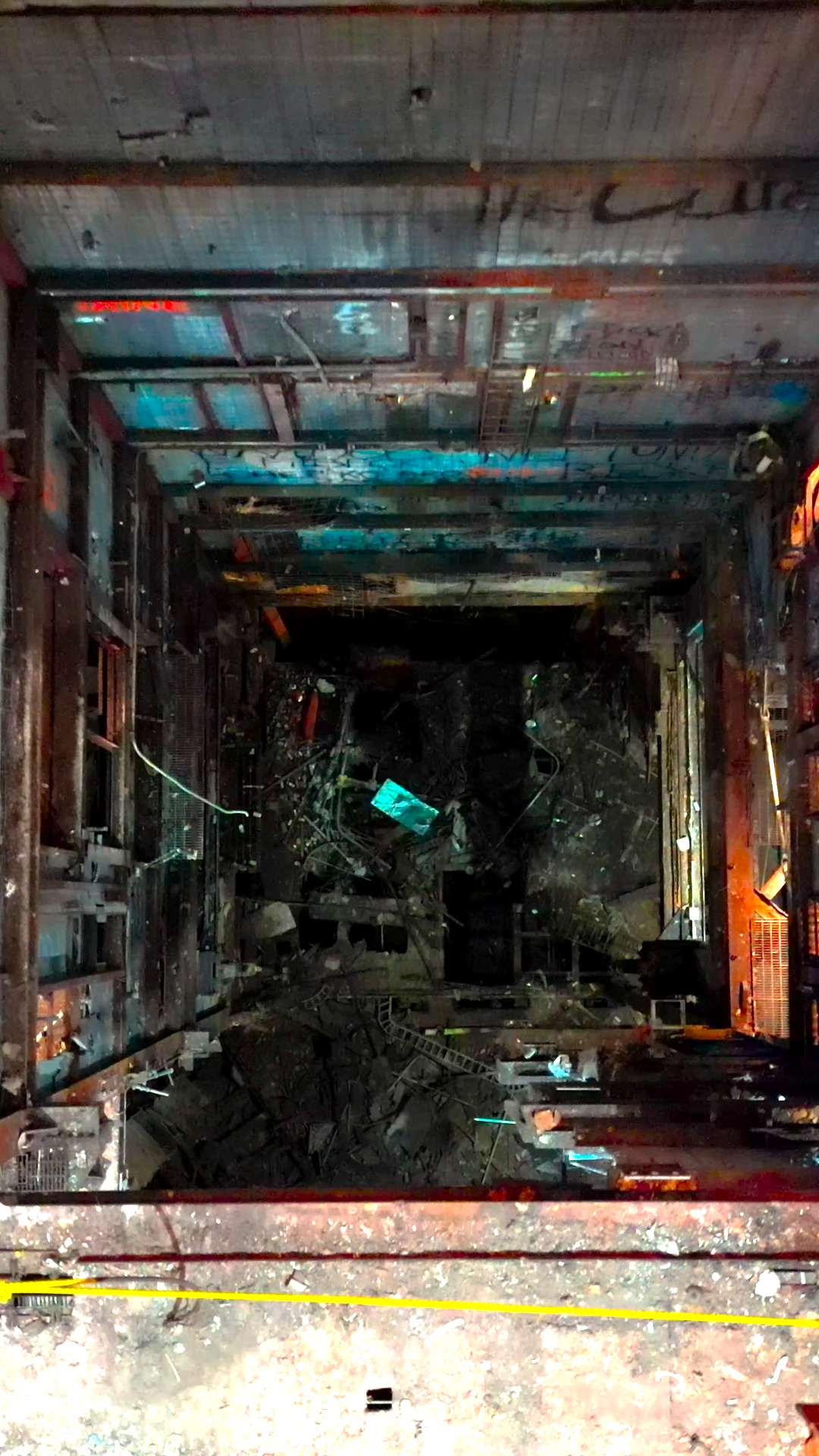
The museum occupies Site 5 of the 578th Strategic Missile Squadron, associated with Dyess Air Force Base. Its exhibition space includes an actual Atlas F silo and launch control center. The operational period was brief compared with the decades that followed: the museum’s history describes Atlas F facilities built in the early 1960s and decommissioned in 1965. These were facilities for an intercontinental ballistic missile system. The Atlas F was stored vertically below ground and raised to the surface for launch.
A renovation project unlike most others
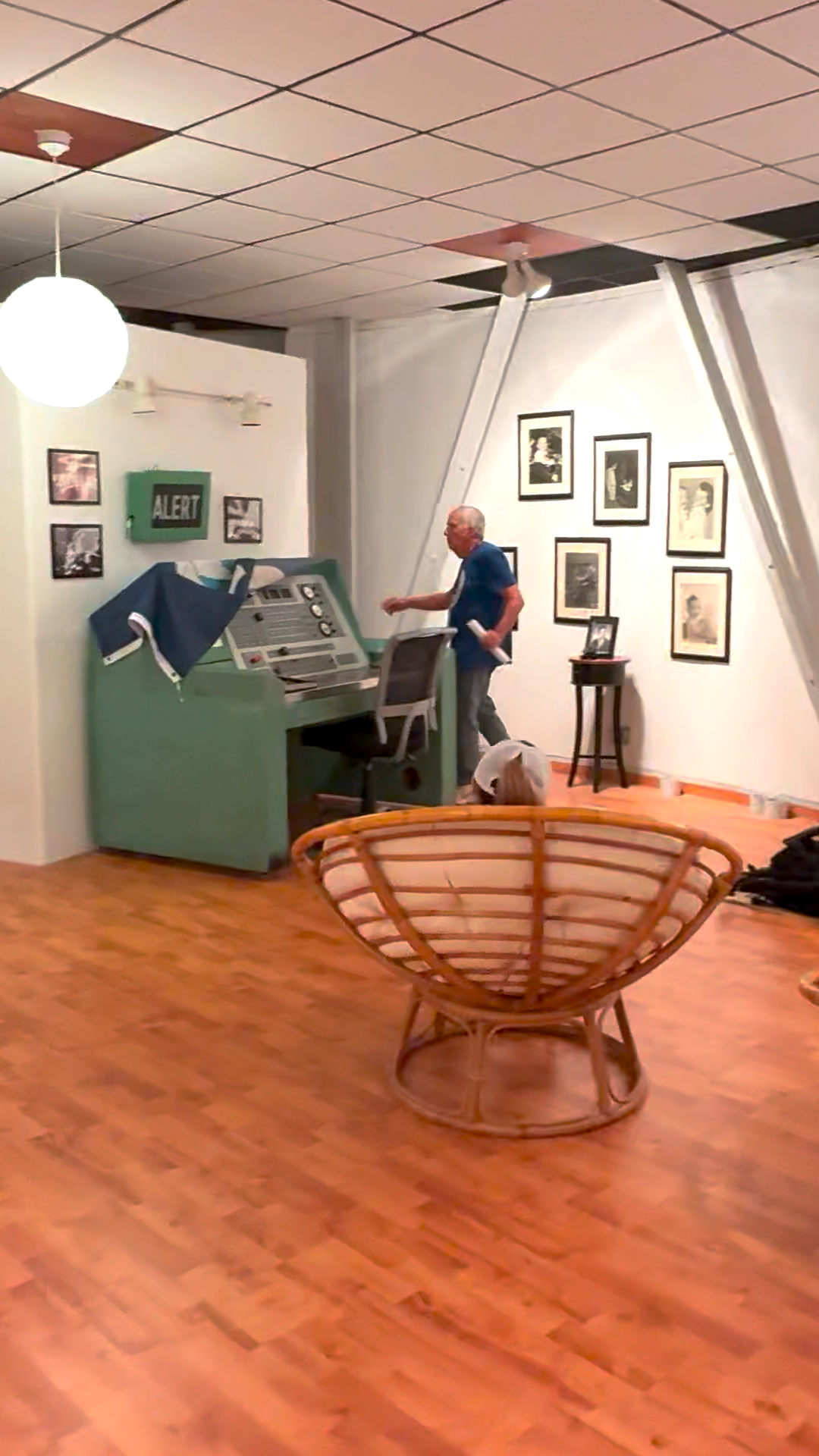
Townsley acquired the property in 1997, according to the museum’s site history. He remodeled the launch control center into a residence, but the silo presented a much larger set of problems. In the interview, he makes an important distinction between the work he could do himself and work that demanded other people’s expertise. A place built for military operations did not become an accessible historical site simply because someone bought it. Equipment had been removed, debris had accumulated, and restoring even one system could require years.
The story of the seventy-five-ton door
The overhead door became a project within the project. The museum records that making it operable required acquiring an original hydraulic actuator, using a crane to open the door, and solving the problem of a missing attachment bracket. Townsley’s account follows the people behind those steps: a crane operator who remembered an advertisement, a salvage-yard owner with the right equipment, people who arranged transportation, and specialists who could fabricate and connect what was missing. A heavy piece of machinery became a lesson in cooperation.
A community of practical knowledge
One part of the interview stays with me: Townsley repeatedly returns to the people who made the work possible. He credits Dick Mead and Wayne Newman for their skills and remembers what he learned from working beside them. The museum records November 2005 as the point when the door became operational. That date marks a mechanical achievement, but the film preserves something harder to put on a sign: the conversations, favors, experiments, and persistence behind it. Industrial preservation depends on that practical knowledge as surely as it depends on surviving concrete and steel.
Preserving a complicated past
A missile complex carries the history of nuclear deterrence as well as engineering. Keeping artifacts and documents together allows visitors to ask how the system worked, why it was built, and what it meant to the people who operated it. The museum’s mission centers on collecting, preserving, and restoring that material. It is not necessary to turn the site into an adventure fantasy to find it compelling. The real engineering, the short operational life, and the long effort to preserve the place are more than enough.
Before planning a visit
This is a managed museum site, not a place for an unannounced exploration. Townsley described appointment-based tours during our conversation. Check the museum’s official website for current arrangements and availability before traveling. Plans mentioned in a recorded interview, including possible acquisitions, should also be distinguished from completed exhibits. The film records what was there and what the museum hoped to do at the time of my visit.
Watch the film
Watch the full film on Facebook.
Sources and further reading
Original Jonny Goodday interview with Bruce Townsley and photographs from the museum visit.
- Atlas Missile Museum of Texas: Official museum website
- Museum history of the Atlas program
- Site 5 at Oplin
- Completed projects: Launch control center and silo door
Continue exploring
More stories from the field
Fort Worth’s Courthouse Outlasted the Officials Who Built It
Fort Worth’s 1895 courthouse came in under budget—and still cost the county judge and commissioners their jobs. Explore the landmark’s history, restoration…
Read the story →
The Last Cut: How Swift & Company Made Fort Worth a Packinghouse City
Swift & Company helped build Fort Worth. Explore the workers, packinghouses, and surviving fragments behind the Stockyards story.
Read the story →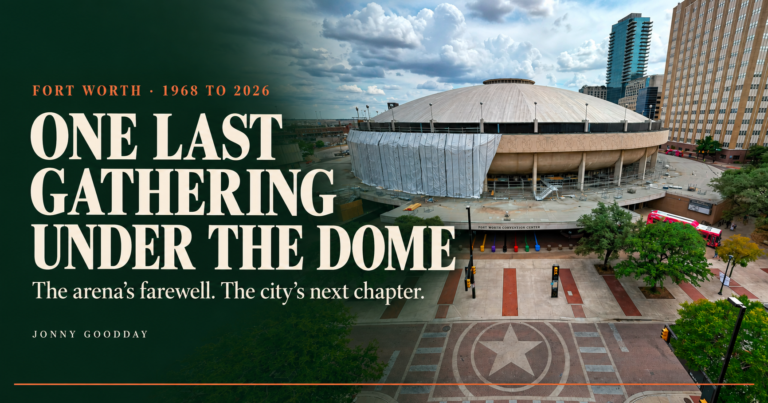
Fort Worth Convention Center Arena: History and Farewell
Explore Fort Worth Convention Center Arena history, photos from its September 20th, 2026, farewell, and the expansion plans replacing its familiar dome.
Read the story →Stay close to the road
Follow the next story.
Occasional article updates, photographs, and films from the field.
Help document the places worth remembering. Support the work →
No Responses