

Fort Worth Stories
Beyond the Cattle Drive: Inside Fort Worth’s Stockyards Museum
The cattle drive brings people onto Exchange Avenue.
In this story
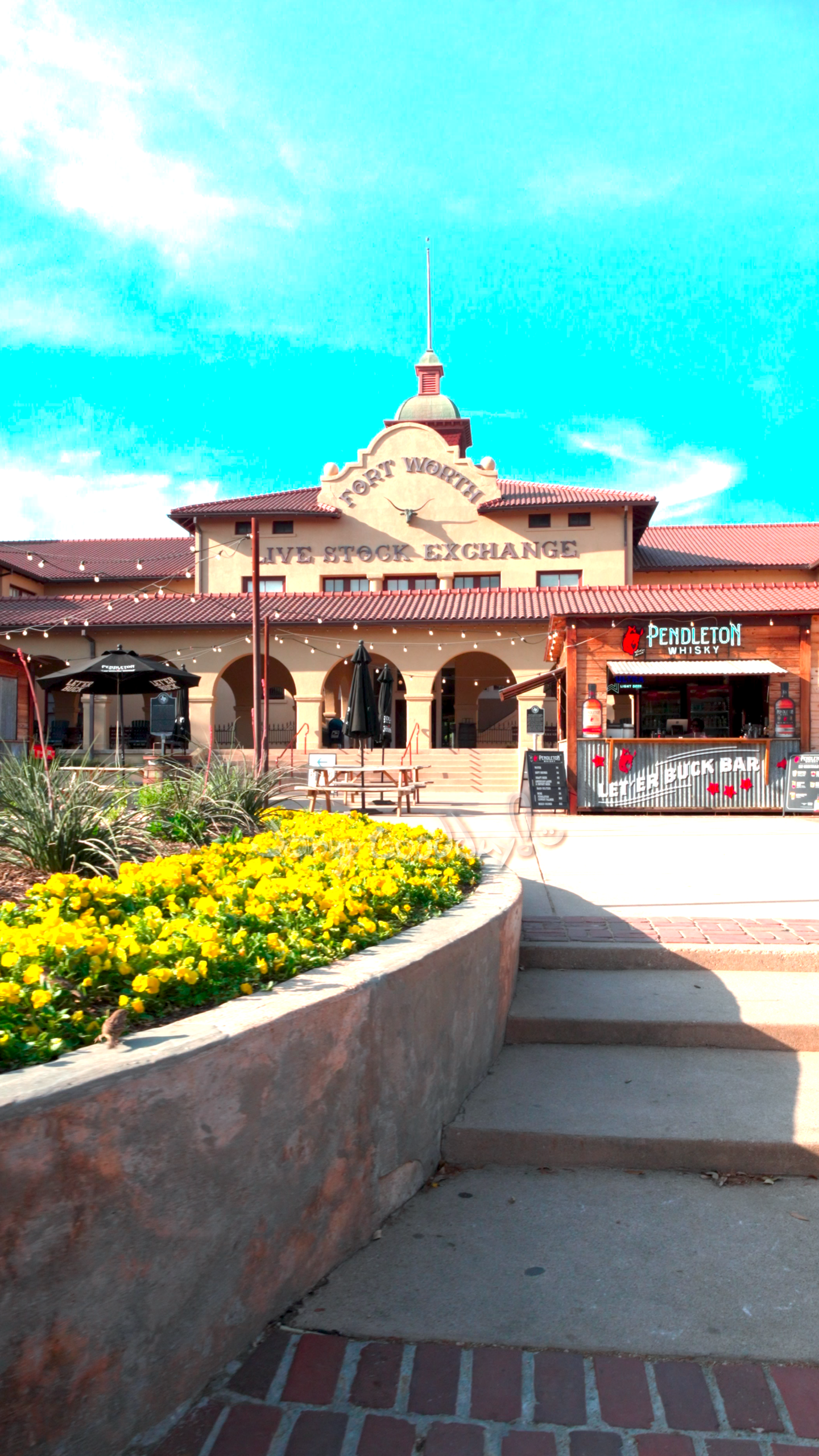
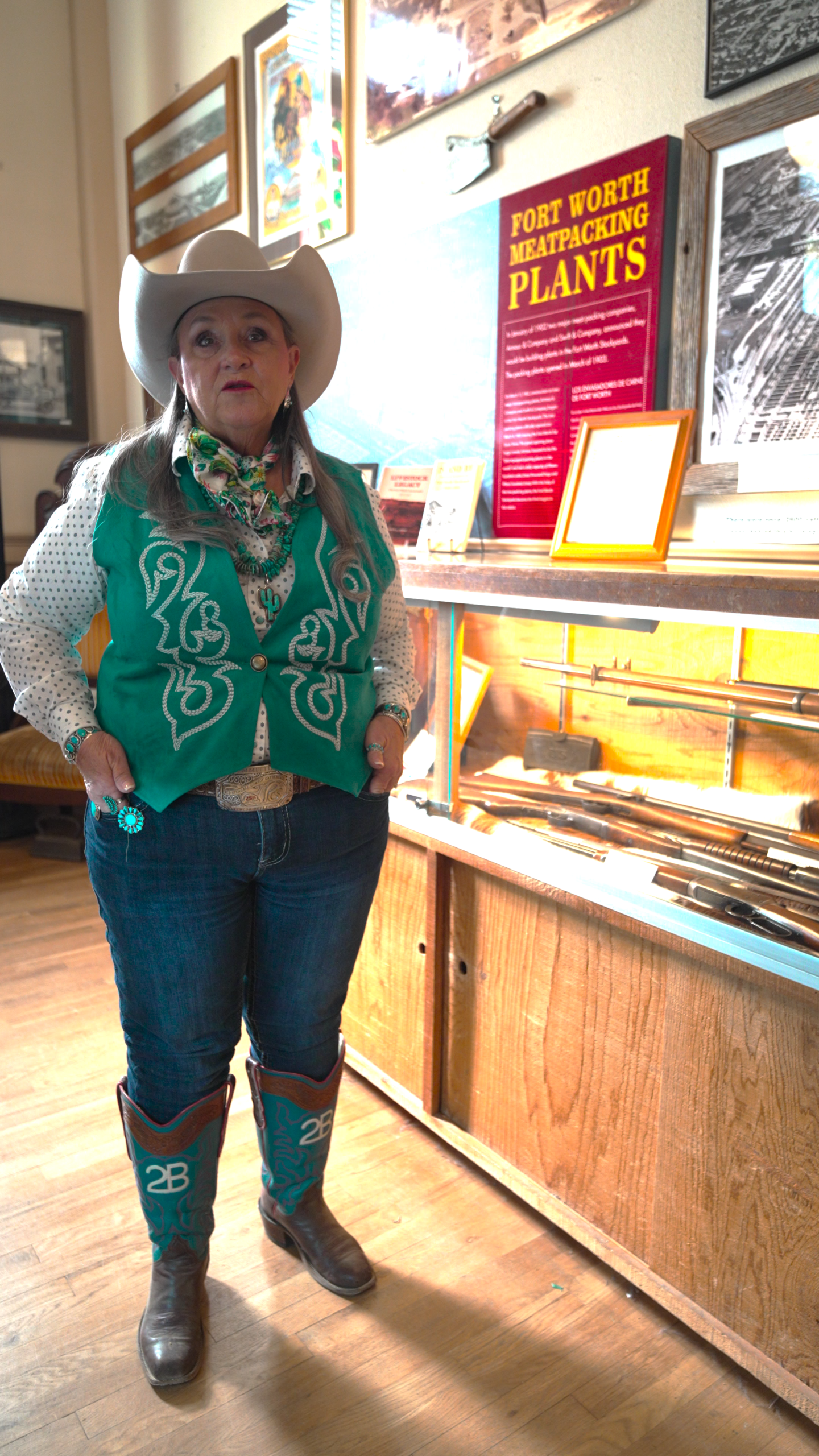
Inside the Livestock Exchange Building, the Stockyards Museum asks them to look at the much larger story behind the street. In my conversation with director Teresa Burleson, the district becomes a place of workers, businesses, families, photographs, and memories, rather than a collection of familiar Western images.
The photographs change the scale
Burleson begins with a historic photograph that makes the old livestock district’s size easier to understand. What a visitor can see on a short walk is only part of the working landscape she describes. The Fort Worth Union Stockyards were incorporated in 1887, she explains, and a change of ownership in 1893 brought the Fort Worth Stockyards name. Pens, rail connections, commission businesses, and packing plants made the area function as an interconnected market. The photographs help place surviving buildings within that much busier setting.
The work behind Cowtown
The arrival of Swift and Armour and the opening of their large packing plants in 1903 helped transform the district. Burleson describes the prosperity and activity that followed. She also points to the importance of horses and mules during the First World War, when Allied buyers came to Fort Worth. It is a useful change of perspective. The livestock story was tied to transportation, industry, labor, and events far beyond the city. A museum object or a photograph can make those larger connections much more concrete.
Why a small museum matters
The North Fort Worth Historical Society opened the museum in 1989. Its role is to preserve and interpret material that could otherwise become separated from the place it explains. Burleson talks about that work with unmistakable affection. She enjoys stepping into the building, hearing the wood floors, and looking out toward the longhorns. Her description gives the institution a human voice. Preserving an archive takes people who choose to spend their working days caring for it, answering questions, and helping visitors see why an apparently ordinary photograph matters.
Look past the most famous name
It is easy for a district with so much visual identity to become a backdrop. The museum offers a reason to pause before moving to the next attraction. Faces in photographs, maps, business records, and artifacts restore some of the complexity that a souvenir view leaves out. That includes the people who did the daily work and the communities that grew around it. The city’s own preservation materials describe the Stockyards as a major employment center before its transition into a visitor destination. Understanding that change makes the district more interesting, not less.
Make the museum part of the walk
The museum is inside the Livestock Exchange Building at 131 East Exchange Avenue. Current hours differ between online listings, so check directly before planning a visit. My film offers an introduction, but the strongest reason to go is the chance to stand with the material itself and ask questions. If the old packinghouse landscape interests you, the story of Swift’s surviving staircase is another part of this same North Side history. The buildings and the archive explain one another when they are considered together.
Watch the film
Watch the full film on Facebook.
Sources and further reading
Original Jonny Goodday interview with Stockyards Museum director Teresa Burleson and location photographs.
- Fort Worth Stockyards: Museum visitor information
- Fort Worth Stockyards: District history and museum origins
- City of Fort Worth: Stockyards historic district
- Related: Swift’s surviving staircase
Continue exploring
More stories from the field
Fort Worth’s Courthouse Outlasted the Officials Who Built It
Fort Worth’s 1895 courthouse came in under budget—and still cost the county judge and commissioners their jobs. Explore the landmark’s history, restoration…
Read the story →
The Last Cut: How Swift & Company Made Fort Worth a Packinghouse City
Swift & Company helped build Fort Worth. Explore the workers, packinghouses, and surviving fragments behind the Stockyards story.
Read the story →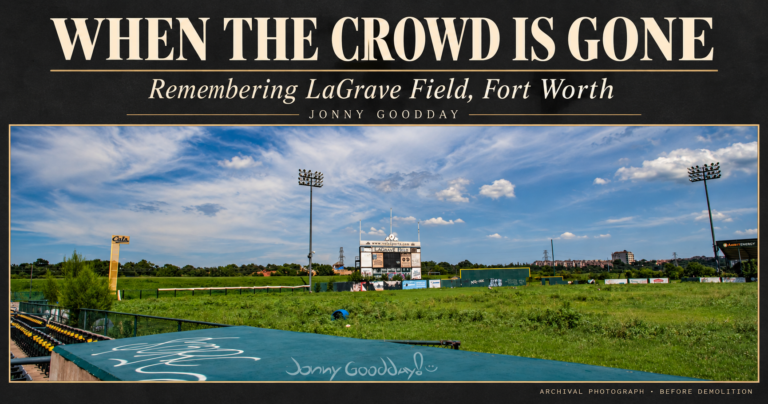
Remembering LaGrave Field and the Fort Worth Cats
Jonny Goodday’s photographs preserve Fort Worth’s LaGrave Field before demolition, connecting the abandoned ballpark with the Cats and the memories it held.
Read the story →Stay close to the road
Follow the next story.
Occasional article updates, photographs, and films from the field.
Help document the places worth remembering. Support the work →
No Responses