

Explorations
Ridgmar Mall’s Last Chapter: From West Fort Worth Landmark to Distribution Center
Some places stay with us because they were beautiful. Others stay because they were where we first became ourselves.
In this story
For me, Ridgmar Mall is both. It was where I had my first job, a place I once entered as a young person looking toward the life ahead, surrounded by storefronts, skylights, food court noise, and the steady movement of people who had somewhere to be. Now the mall is standing at the edge of another life. A new logistics and distribution project has been announced for the Ridgmar site, and the old shopping center appears likely to give way to warehouses, loading docks, and the quiet machinery of modern commerce.
A mall built for the west side
Ridgmar Mall opened on October 20th, 1976, at Interstate 30 and Green Oaks Road. At the time, it was Fort Worth's first fully enclosed shopping center, a climate controlled world of skylights, fountains, trees, benches, and more than 130 stores. Its original anchors included Dillard's, JCPenney, Neiman Marcus, and Sears. The mall was not simply a place to buy things. It was a destination, a meeting point, an indoor landscape where a family could spend an afternoon without ever needing to look at the weather.
Through the 1980s and 1990s, Ridgmar was one of west Fort Worth's defining public spaces. People went there for holiday photographs, school shopping, movies, meals, first dates, and the small rituals that made a regional mall feel like part of a town's shared life. It was the kind of place where you could recognize people you knew, even when you had not planned to see them.
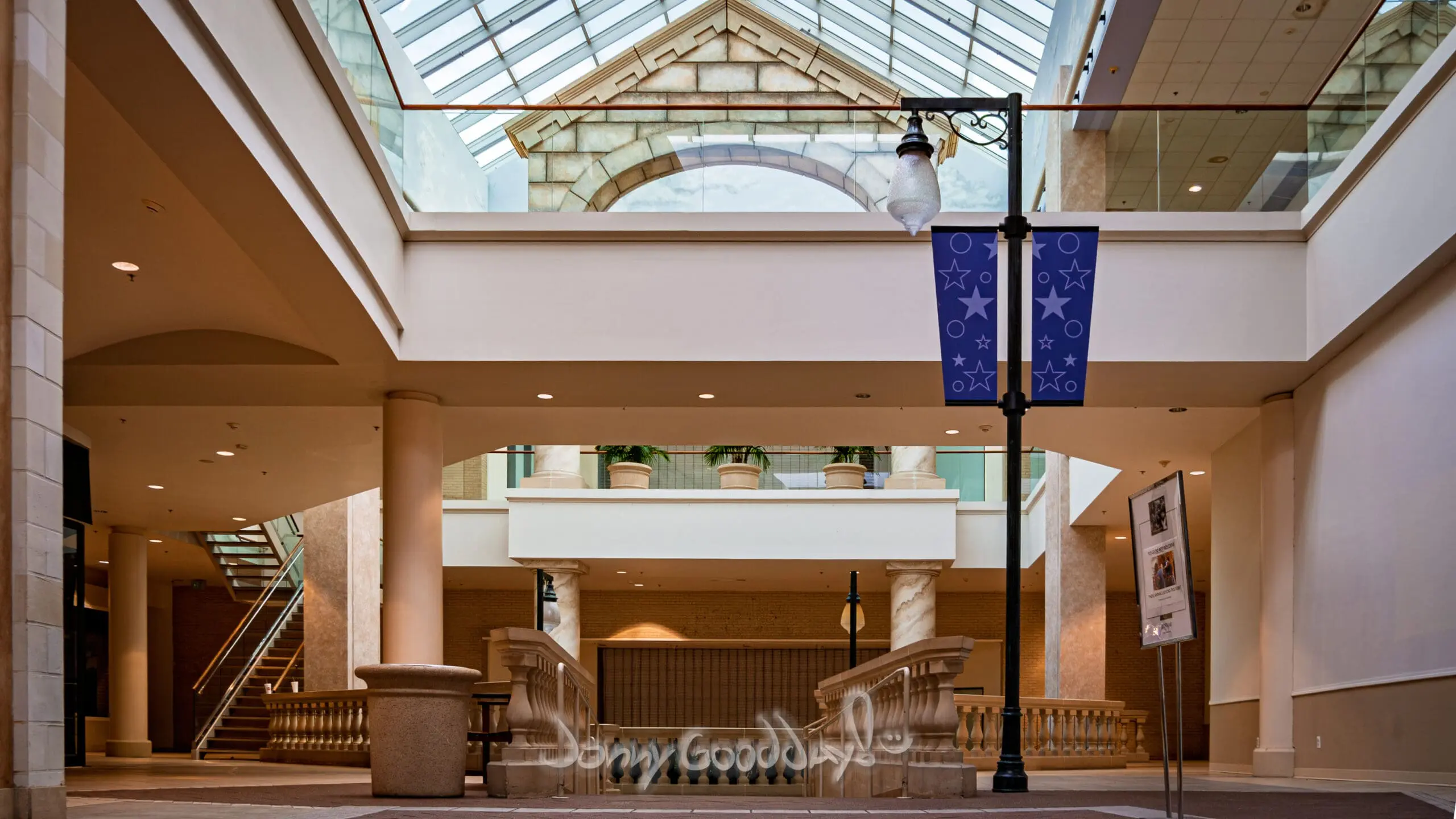
The property went through a major interior renovation around the turn of the century, an effort that tried to carry the mall into a new retail era. For a while, it worked. The architecture still had a sense of occasion: tall interior spaces, a dramatic skylit court, long sightlines, and the promise that something might be happening around the next corner.
My first job at Ridgmar
My connection to Ridgmar is not only historical. It is personal. My first job was at Which Wich inside the mall. I met great people there, including the owner, Mario. Which Wich eventually went under as the cost of rent rose, a pressure many businesses in the mall and across the region were facing. I still keep up with many of the people I met while working there, which makes this place feel less like a closed retail property and more like a room full of old connections.
That changes the way I walk through it now. I do not see only vacant storefronts or tired finishes. I see the beginning of my own working life. I remember the feeling of going in with a schedule, a responsibility, and the new awareness that a place could depend on me to show up. A first job is rarely just a first paycheck. It is one of the first times the world asks you to become accountable outside your home and school. Ridgmar was part of that education for me.
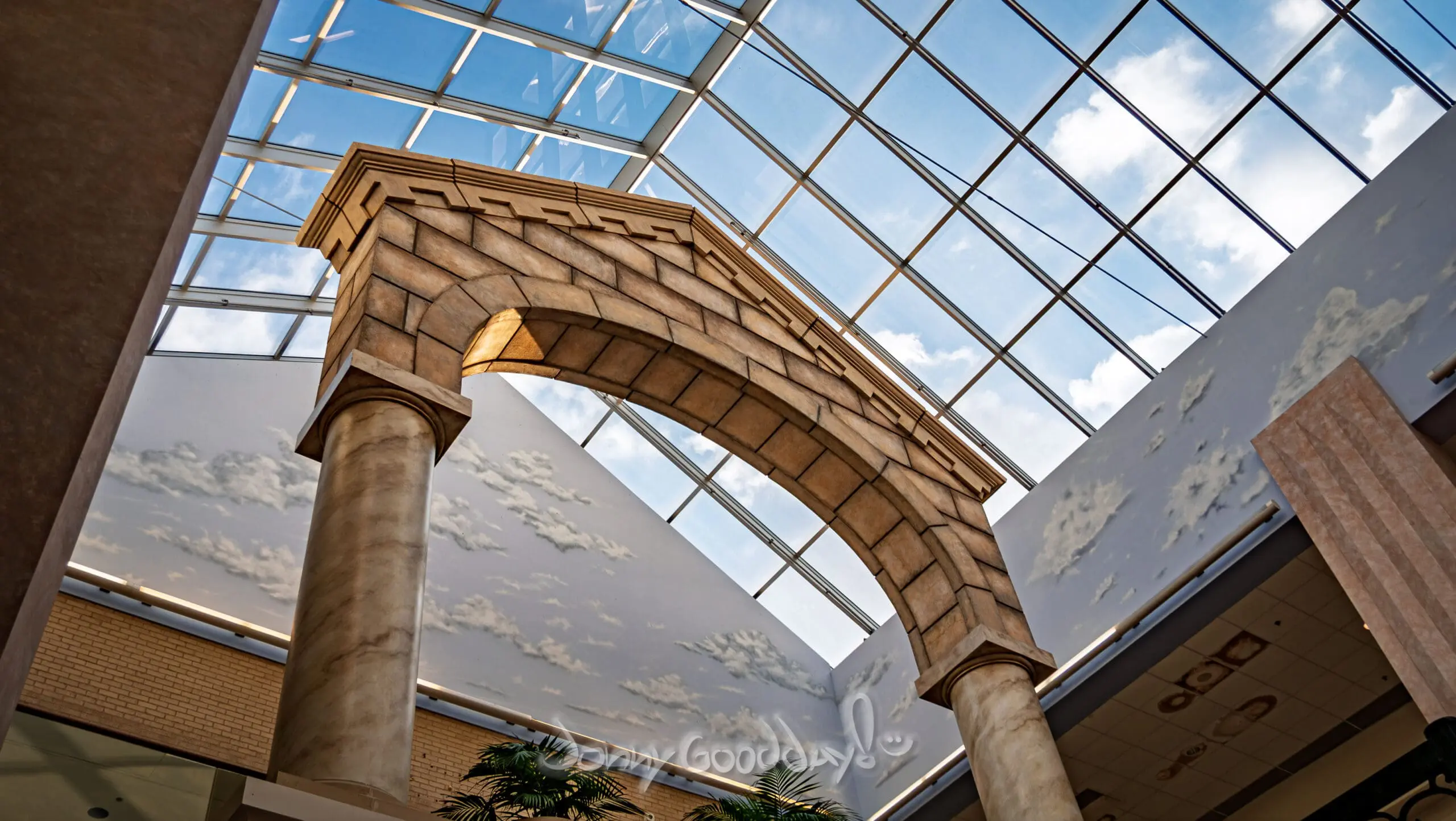
That is why photographing the mall in its current condition feels less like documenting an abandoned building and more like standing beside an old acquaintance who has outlived the version of itself everyone remembers. The bones are still there. The skylight still gathers the Texas sky. The stone arch still makes an entrance feel ceremonial. But the energy that once filled those spaces has thinned.
When the anchors began to leave
Ridgmar's decline was not caused by one closure. It came in stages, as the center of North Texas retail moved and the habits of shoppers changed. Macy's closed its Ridgmar location in 2016. Sears and Neiman Marcus followed in 2017. SeaQuest, which had brought a newer kind of attraction into the mall, closed in 2024. JCPenney, one of the original anchors, has now announced that its Ridgmar store will close on November 1st, 2026. Dillard's remains, along with the cinema and other businesses, but the old anchor to anchor rhythm has been broken.
There were attempts to imagine a future for the property. Plans proposed new retail, open air sections, housing, restaurants, and a more walkable environment. Some pieces moved forward; larger visions stalled. Meanwhile, the mall kept asking the same question that many older enclosed malls have had to face: what is a building designed for a different retail age allowed to become?
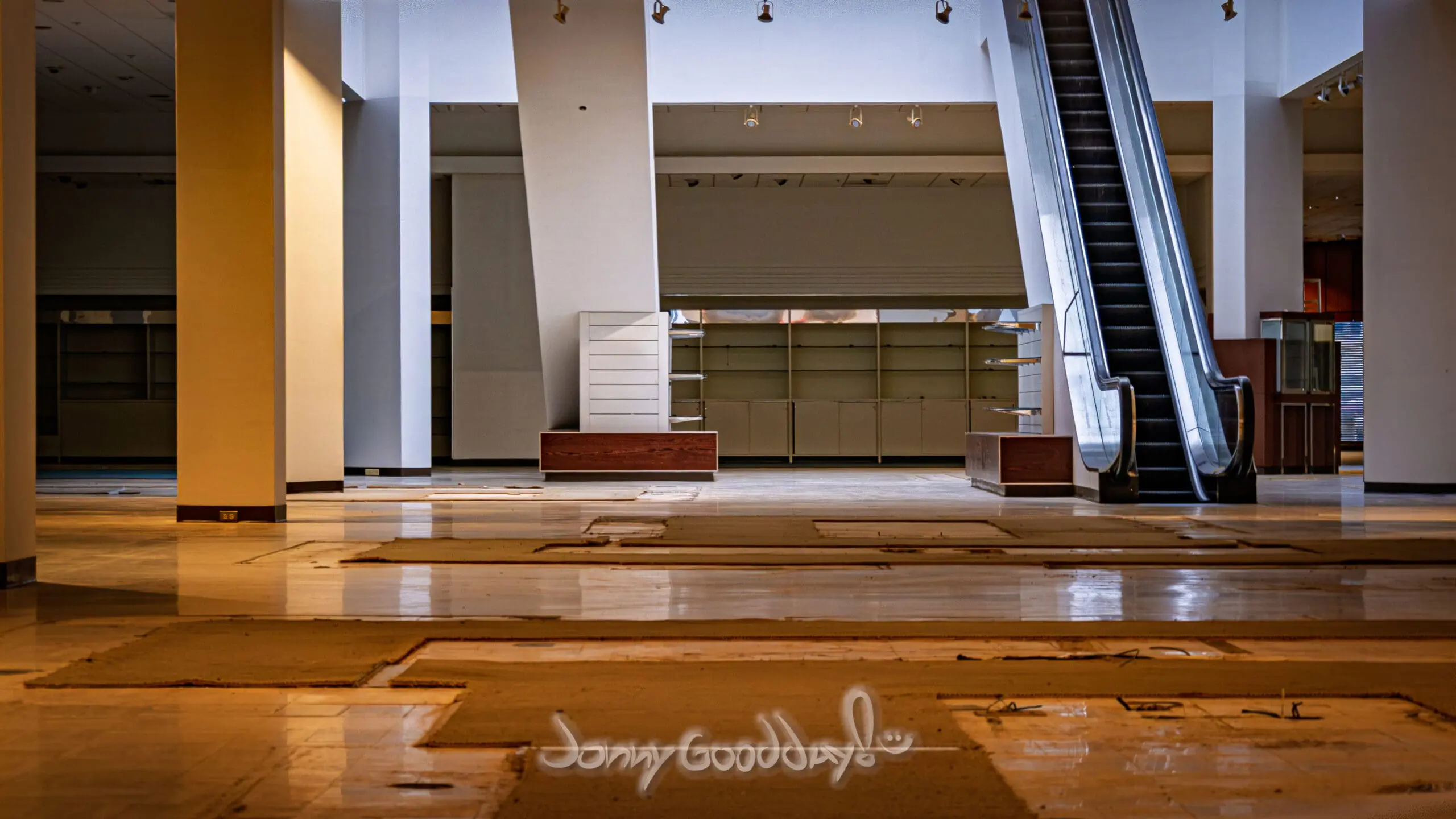
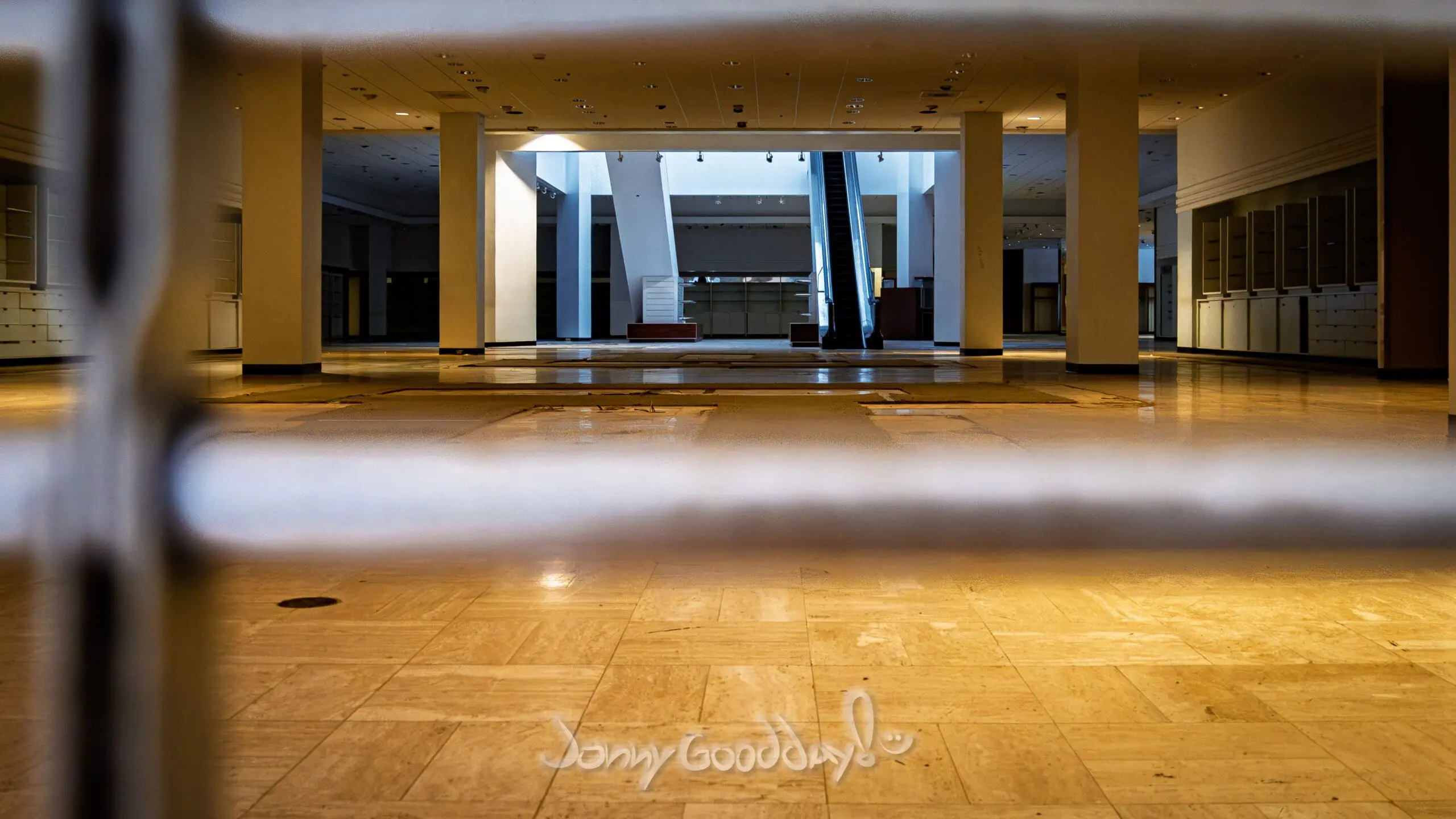
The photographs in this story answer that question quietly. An empty court does not mean nothing is happening. It means the purpose of the room has changed. A dark storefront still carries the scale of the business that once occupied it. A skylight can remain magnificent even when the crowd beneath it is gone.
Ridgmar 30 Logistics Crossing
The latest announcement brings a much more definite answer. Ramrock Real Estate, a Dallas based investment and development company, has announced the acquisition of the former Sears department store and Sears Auto Center parcel at Ridgmar Mall. The transaction covers roughly 150,000 square feet in the former Sears building, a 17,000 square foot auto center, and 12.5 acres owned by Transformco Properties.
The planned redevelopment is being called Ridgmar 30 Logistics Crossing. Publicly described plans call for a six building, Class A logistics development totaling approximately 931,000 square feet. In practical terms, the site is being positioned for distribution and industrial users, large buildings designed for the movement, storage, and delivery of goods rather than for shoppers moving from store to store.
There is an important distinction here. The announcement is not simply that one empty department store will quietly become a warehouse. It describes a larger redevelopment of the Ridgmar site, with the former Sears parcel as a key part of that transformation. The final sequence of demolition, construction, tenant use, and what happens to the mall's remaining businesses will depend on the approvals and plans that follow. But the direction is clear: Ridgmar is being asked to serve the logistics economy of the present instead of the retail economy that built it.
That shift makes sense on paper. The property sits beside major highways, close to the industrial and defense corridors that define west Fort Worth, and surrounded by a region where distribution space is in constant demand. A logistics campus can generate investment and jobs. It can put a long underused property back into active use. It can solve a problem the mall has been carrying for years.
Still, there is a human cost to every efficient answer. A distribution center does not replace a mall in the ways people mean when they say they miss a mall. It does not give teenagers a place to wander, families a place to meet, or a young worker a first job beneath a skylight. It may be useful, but usefulness is not the same thing as memory.
A shame, and also an ending that was coming
It is a shame to see Ridgmar reach this point. The photographs make that difficult to avoid. This was not a small strip center that disappeared without anyone noticing. It was a large civic interior, built to make ordinary errands feel like an outing. Its architecture still carries some of that ambition, which is why the emptiness feels so pronounced.
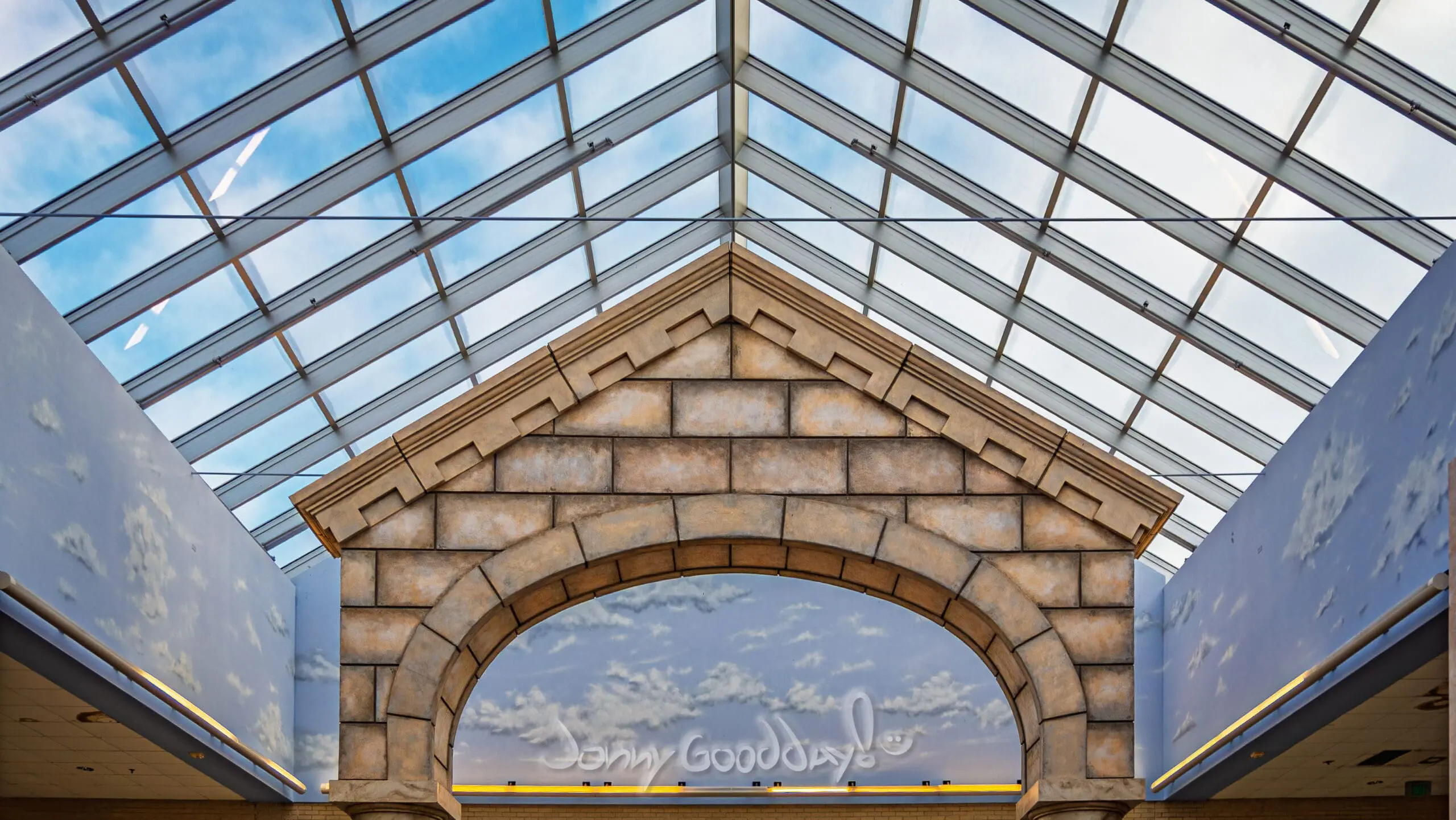
But it is also true that Ridgmar has been calling for an ending, or at least a decision, for a long time. A half alive mall can be harder to bear than a clearly closed one. Empty corridors ask people to keep imagining a revival while the building continues to age around them. The announced logistics project may be an ending, but it is also a commitment to give the land a purpose again.
I wish that purpose could have held more of the old public life. I wish the next chapter had found a way to keep the great interior spaces, the gathering places, and the ordinary human scale that made Ridgmar matter. But places do not always get the futures we would choose for them. Sometimes the honest work is to record what they were before the walls come down.
Ridgmar Mall was where I had my first job. It was once where west Fort Worth came to shop, celebrate, and pass the time. Now it is becoming part of a different network, one measured in square feet, freight routes, and the movement of goods. The mall may soon be gone, but the first version of it will remain in the people who grew up there, worked there, met there, and remember what it felt like when the lights were on and the corridors were full.
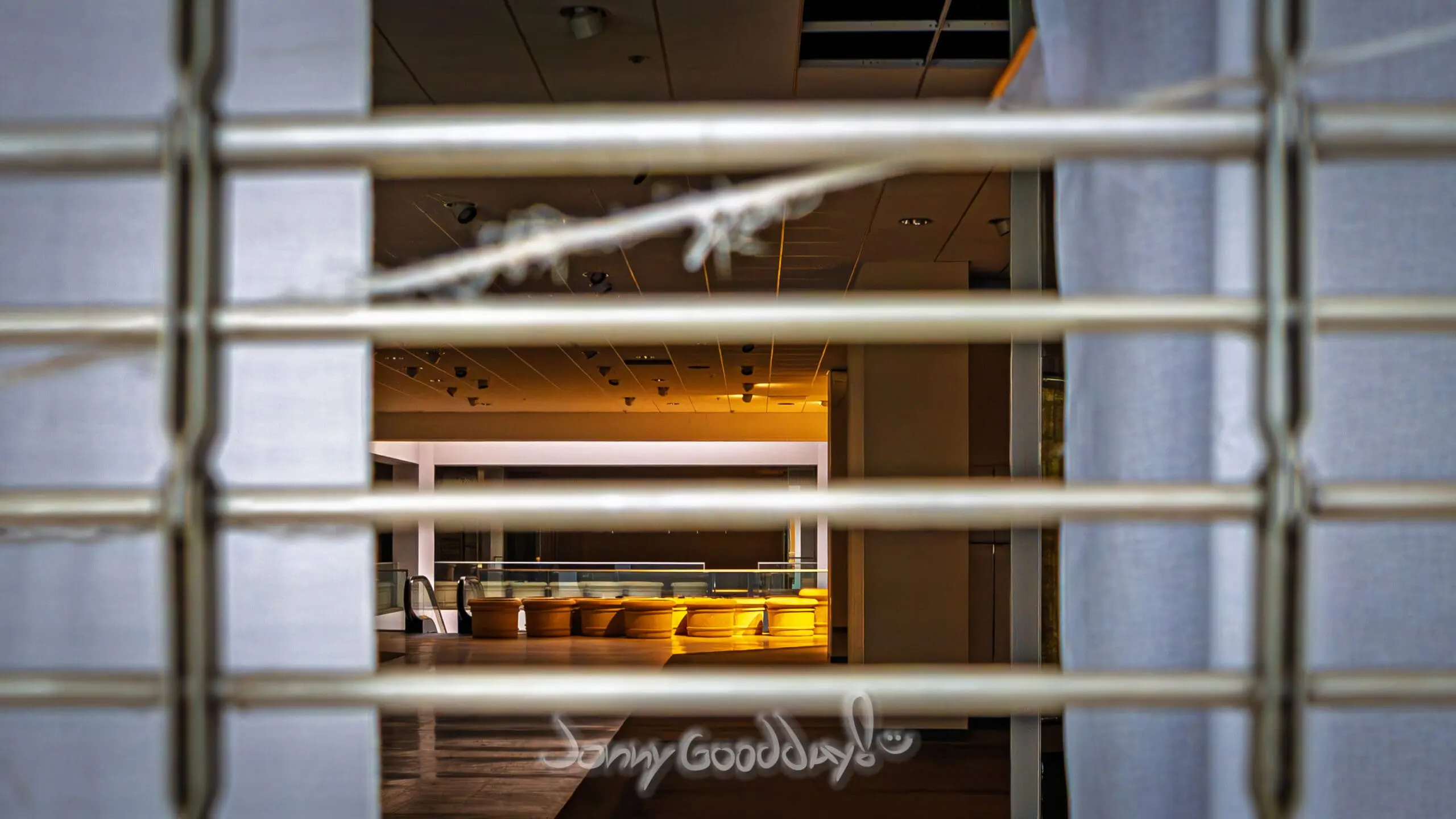
All photographs by Jonny Goodday. Project details and redevelopment timelines may change as approvals and construction planning move forward.
Further reading
- Ridgmar Mall during its heyday, Fort Worth Star Telegram.
- Redevelopment plans for Fort Worth's Ridgmar Mall, Fort Worth Star Telegram.
- JCPenney's planned Ridgmar Mall closing, Fort Worth Star Telegram.
Continue exploring
More stories from the field
Fort Worth’s Courthouse Outlasted the Officials Who Built It
Fort Worth’s 1895 courthouse came in under budget—and still cost the county judge and commissioners their jobs. Explore the landmark’s history, restoration…
Read the story →
The Last Cut: How Swift & Company Made Fort Worth a Packinghouse City
Swift & Company helped build Fort Worth. Explore the workers, packinghouses, and surviving fragments behind the Stockyards story.
Read the story →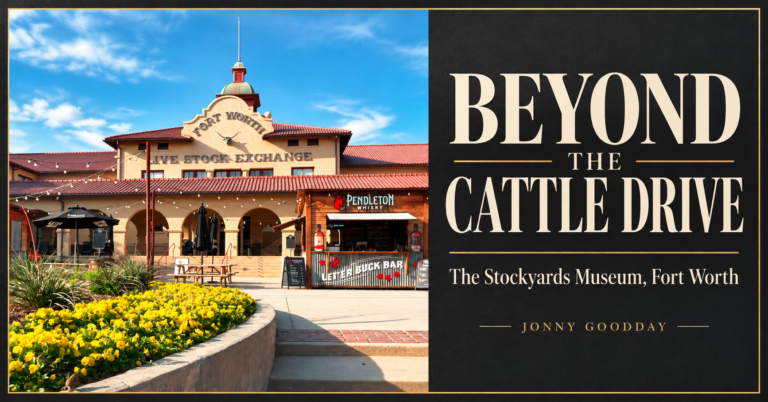
Inside Fort Worth’s Stockyards Museum with Teresa Burleson
Join Jonny Goodday and museum director Teresa Burleson for the photographs, people and working history behind Fort Worth’s Stockyards Museum.
Read the story →Stay close to the road
Follow the next story.
Occasional article updates, photographs, and films from the field.
Help document the places worth remembering. Support the work →
One Response
It’s actually spooky in there now. I visited Ridgmar Mall in the Spring, just because I was in the area and I knew it was probably my last chance. I honestly took a defensive attitude upon entering (like walking alone in a dark parking lot) since it was devoid of people and poorly lit. There was some kind of war museum and I was glad when I reached the doors of Dillard’s. Even there it felt odd. More people were working the floor and counters than there were shoppers. It was all very sad. In the 80’s this was a great place to hang out as a teenager or to go buy Christmas clothes with the family. The area’s decline, the reduction in forces at the military base and the general change to the retail landscape certainly took its toll. Repurposing the space is better than it becoming a hollow eyesore and will allow for jobs in the area.