

Texas History
The Old Mill That Shaped Rhome
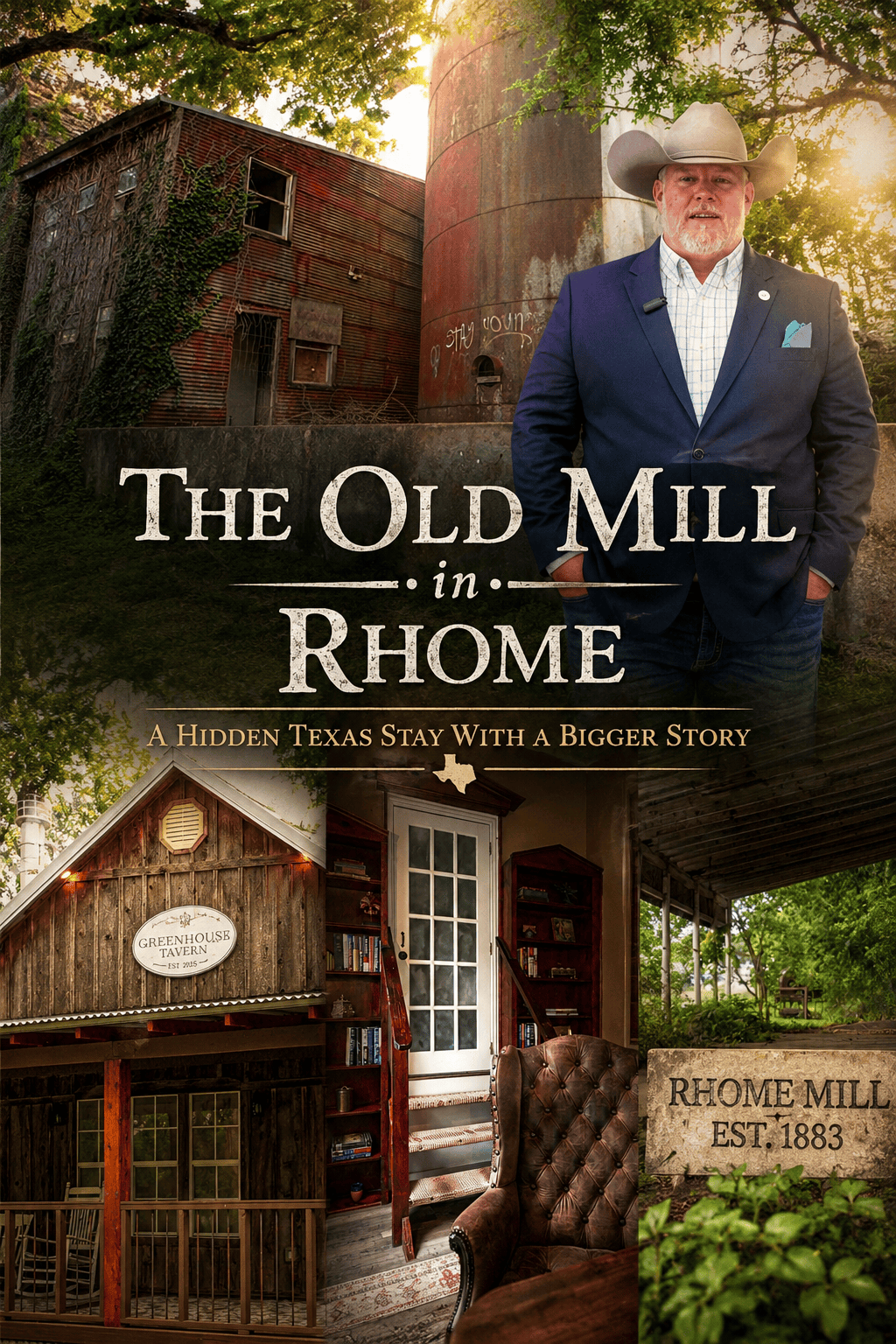
Rhome Mill stands behind the railroad tracks in Rhome, Texas, holding a story much larger than its weathered walls.
In this story
It reaches from frontier flour sacks to the dome of the Texas Capitol.
Brian Walker calls the Old Mill in Rhome a passion project. He and his wife, Kelly, purchased most of the historic property in 2021 with a plan to preserve it in phases. Their first completed project transformed the former grain house into two guest suites.
The suites offer a way to stay beside history. The deeper story, however, is found in the stone, rusted silos, old mill buildings, and the generations of work connected to the site.
“It’s an amazing story of what can be done with a dilapidated building.”
Brian Walker
How the Rhome Mill shaped a new town
The modern town of Rhome took shape beside the Fort Worth and Denver City Railway in 1883. The City of Rhome records that the community had 175 residents, a school, a church, and two flour mills by the early 1890s.
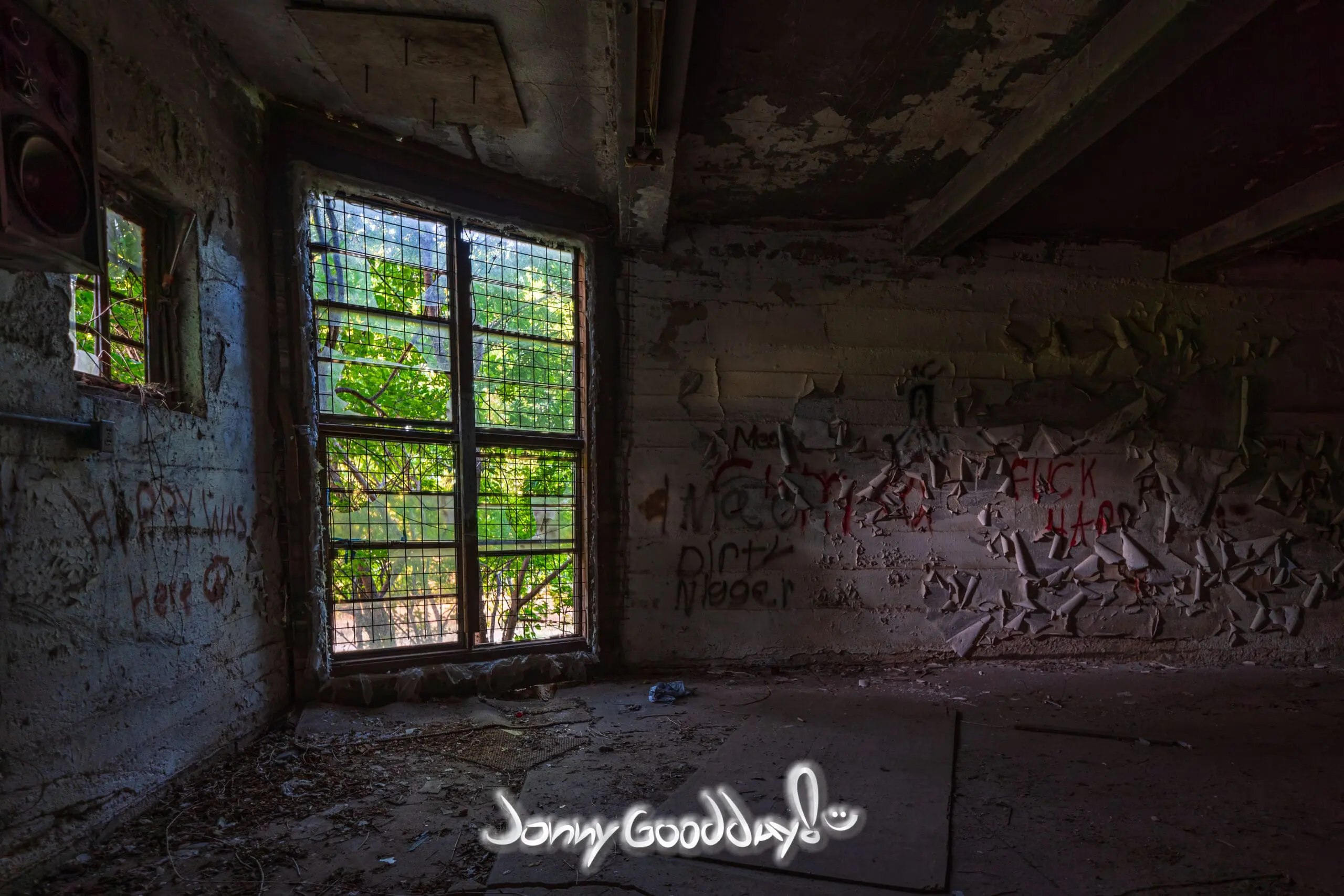
Walker’s research traces the oldest stone portion of the mill property to the founding era of the town. He believes brothers operating at the site used the building for early milling and possibly as a general store.
By the late nineteenth century, roller milling technology was changing how wheat became flour. Steel rollers could produce a more consistent refined product than older stone burr systems. The Rhome mill adopted that new process early.
“It was important for communities to be able to get fresh flour locally.”
Brian Walker
The official history published by the City of Rhome describes the operation as the first roller mill in Wise County and possibly the first in Texas. It was operating by 1898.
The Gold Medal connection
The mill became closely associated with L. W. Renshaw, who operated it for decades and became the first mayor of Rhome. Renshaw was also a powerful local figure whose influence reached into Wise County politics.
One of the mill’s most remarkable stories concerns a name still found in grocery stores today. The Rhome operation sold flour under the Gold Medal name. According to the City of Rhome, General Mills paid Renshaw $5,000 during the 1930s for the rights to the brand name he had been using.
Walker sees the episode as evidence that this small town mill was connected to a much larger history of American food production.
“Somehow they found out that Mr. Renshaw here at the Rhome Milling Company had a Gold Medal flour that predated their use.”
Brian Walker
The story is unusually local and national at the same time. Grain came through Rhome, workers loaded flour trucks, and a brand associated with a Wise County mill became part of one of the best known names in American baking.
A family tied to Texas politics
The mill’s political connection continued through Renshaw’s daughter, Anna. Walker’s research led him to Anna Marie Renshaw Mallory, who grew up across the street from the mill and later served for many years in the Texas House of Representatives.
Her early memories included loading flour trucks at the family operation. The mill was not a distant monument. It was part of daily life, family work, and the economy of Rhome.
The surviving scale house and industrial buildings help make that history visible. They show how agricultural products moved through the site and how closely the mill was connected to the railroad and surrounding farms.
When the Goddess of Liberty came to Rhome
After the milling operation ended, the property found other uses. During the 1980s, sculptor Bavo Walker operated the American Art Foundry at the site.
That chapter brought one of the most recognizable objects in Texas to Rhome.
The Goddess of Liberty had stood on the Texas Capitol dome since 1888. By the 1980s, the zinc statue was cracked and corroded. The Texas State Library records that the original was removed, restored, and used to create molds for a lighter aluminum replacement.
The original statue traveled from Austin to the foundry at the Rhome mill property for that work.
“Out of 254 counties, she came right here to Wise County, here in Rhome, Texas, on the old mill property.”
Brian Walker
Photographs preserved by the Portal to Texas History document workers with the statue at the foundry. The new aluminum Goddess returned to the Capitol dome in 1986. The restored original is now displayed at the Bullock Texas State History Museum in Austin.
That journey places the Old Mill in Rhome inside the preservation history of the Texas Capitol itself.
A new life in the grain house
The former grain house once stored wheat, corn, and other products waiting to be milled. It later became a residence, then sat vacant before the Walkers began their renovation.
Contractors were not always convinced it could be saved.
“Some of the contractors and even the inspector, when they first came out, thought I was crazy for even trying to renovate this property.”
Brian Walker
The finished Greenhouse Tavern contains two connected suites, each with its own bedroom, bathroom, living area, and fireplace. One includes a full kitchen. The other has a quiet study and library for writing and research.
Walker completed much of the finish work himself. Reclaimed wood, corrugated metal, historic images, fireplaces, and carefully chosen furnishings give the rooms a sense of continuity with the industrial property outside.
The result demonstrates a central idea of preservation. A building can change its purpose without erasing its identity.
Finding the next steward
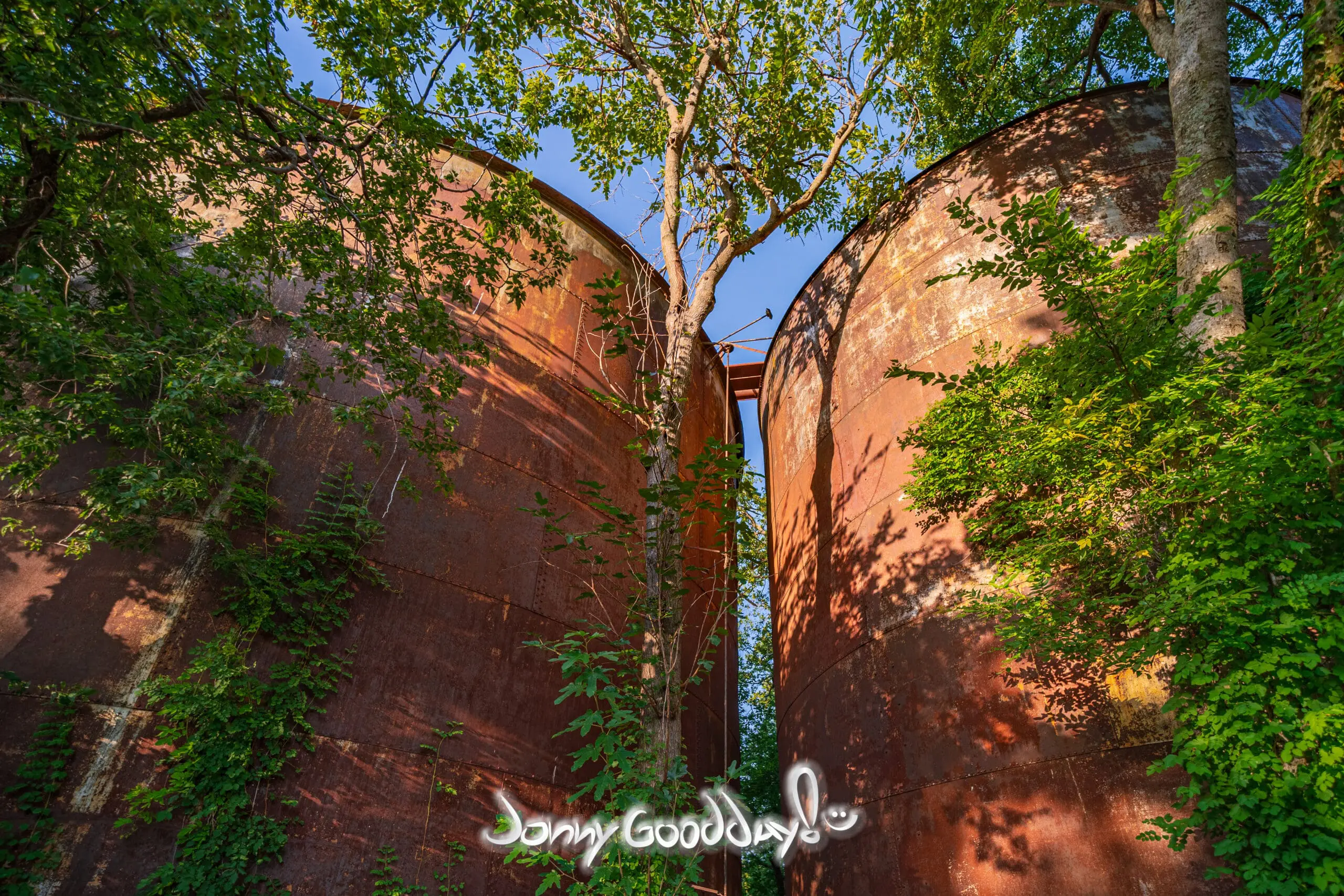
The Walkers originally imagined several phases for the property. Ideas included a restaurant, guest rooms built into the silos, and an event venue inside the main mill structure.
Life and growing professional demands eventually led the family to offer the property for sale. The decision was not an abandonment of the dream. It was an invitation for another person to continue it.
“We hope that we find the right buyer who would be willing to steward it in the right way, who has similar plans to preserve this beautiful piece of history.”
Brian Walker
The word steward matters. The Old Mill is not simply a collection of old buildings. It is one of the places where Rhome became a town. It connects farmers and mill workers to a household brand. It connects a local political family to the Texas Legislature. It connects an abandoned foundry to the Goddess standing above the Capitol.
Its future remains open. That uncertainty makes the record created now even more important. The photographs, interview, and surviving structures preserve a moment when the mill is standing between what it was and what it could become.
WATCH THE STORY
Films from the Old Mill
See the rooms, machinery, and restored spaces while Brian Walker tells the story of the property in these films published by Jonny Goodday.
Watch the full Old Mill film on Facebook
Frequently asked questions
When was the Old Mill in Rhome built?
Parts of the property may date to the founding of Rhome in 1883. The roller mill was operating by 1898.
Was the Rhome mill connected to Gold Medal Flour?
The City of Rhome reports that General Mills paid mill owner L. W. Renshaw $5,000 in the 1930s for rights to the Gold Medal brand name he had used.
Was the Texas Capitol statue restored in Rhome?
Yes. The original Goddess of Liberty was brought to the foundry operating on the old mill property during the 1980s. It was restored and used to create molds for the replacement statue now on the Capitol.
Can people stay at the Old Mill in Rhome?
The former grain house was renovated into the Greenhouse Tavern, which contains two connected short term rental suites.
Is the Old Mill in Rhome for sale?
As of July 2026, the property is offered at $990,000. Interested buyers can contact Shane Benner with Bradford Commercial at 817 980 2079 for current details.
Sources: Interview with Brian Walker recorded by Jonny Goodday in April 2026. Historical information from the City of Rhome, the Handbook of Texas, the Texas State Library and Archives Commission, and the Portal to Texas History.
Continue exploring
More stories from the field
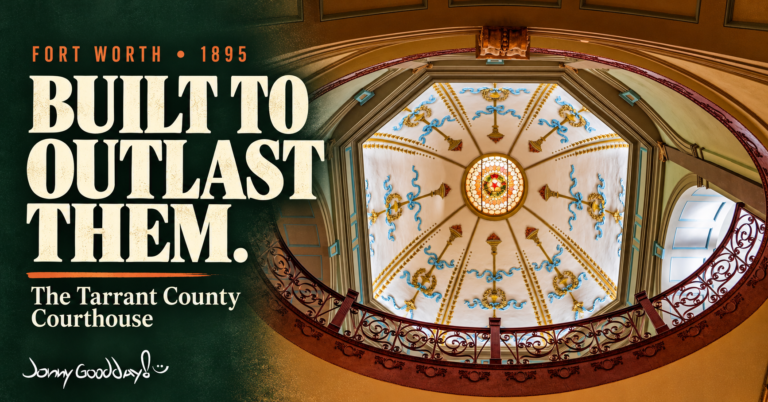
Fort Worth’s Courthouse Outlasted the Officials Who Built It
Fort Worth’s 1895 courthouse came in under budget—and still cost the county judge and commissioners their jobs. Explore the landmark’s history, restoration…
Read the story →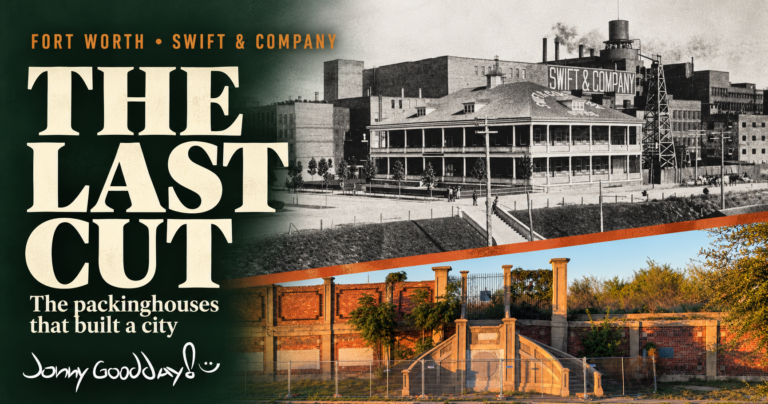
The Last Cut: How Swift & Company Made Fort Worth a Packinghouse City
Swift & Company helped build Fort Worth. Explore the workers, packinghouses, and surviving fragments behind the Stockyards story.
Read the story →
Inside the Atlas Missile Museum of Texas at Oplin
Go inside Oplin’s Atlas Missile Museum with Jonny Goodday and Bruce Townsley, where Cold War history and a remarkable community restoration meet.
Read the story →Stay close to the road
Follow the next story.
Occasional article updates, photographs, and films from the field.
Help document the places worth remembering. Support the work →
No Responses